 bluename
 How to Classify Cactus Species Based on Growth Habits: A Gardener's Practical Guide
For years, my cactus collection was a beautiful mess. I had tall, columnar giants crammed next to sprawling, ground-hugging clusters, all receiving the same care. The result? Some thrived, others etiolated, and a few tragically rotted. My core frustration was universal: I loved these resilient plants but lacked a system to understand their fundamental needs. Simply knowing their scientific names wasn't enough. I needed a functional framework—a way to classify cactus species based on their growth habits to provide tailored care. This realization sparked a two-week intensive observation and reorganization project that transformed my approach to cactus cultivation.
Why Growth Habit Classification is Your Key to Success
You might wonder why we can't just water and sun all cacti the same. The answer lies in their architecture. A cactus's growth habit—its shape, structure, and how it occupies space—is a direct evolutionary response to its native environment. This physical form dictates its light requirements, water storage capacity, and root system behavior. By learning to identify these habits, you're essentially decoding the plant's own manual for survival. As noted by the Arizona-Sonora Desert Museum, the diversity in cactus morphology is a spectacular adaptation to specific ecological niches, meaning a one-size-fits-all care routine is a recipe for failure.
My Two-Week Observation and Reclassification Project
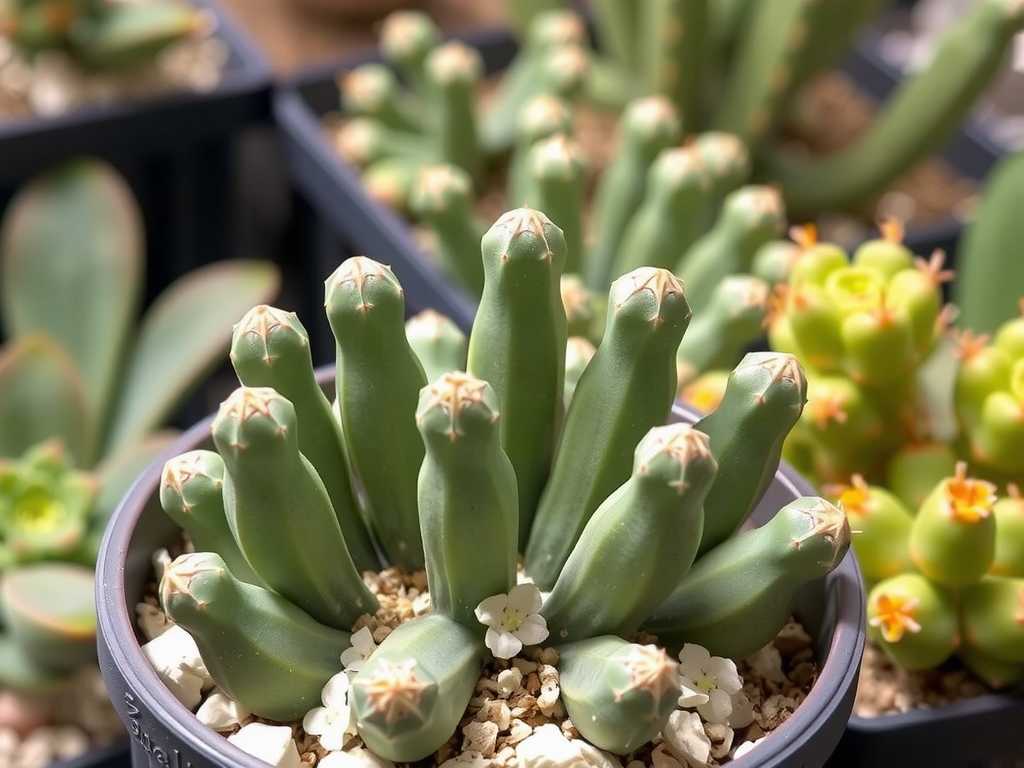
I decided to apply theoretical knowledge hands-on. For 14 days, I became a detective in my own greenhouse, moving beyond labels and observing each plant's physical structure and recent growth patterns. I kept a detailed journal, noting stem thickness, areole spacing, and pup formation. This process wasn't just academic; it was about connecting form to function.
Week One: Documentation and Initial Sorting I started by photographing and measuring every cactus. I noted which ones were stretching toward the light (a sign of etiolation) and which showed plump, firm growth. I quickly identified my first major "pitfall": I had been overwatering my globular cacti because their soil stayed wet too long, while my columnar types were parched. The solution was immediate but careful repotting into better-draining mixes suited to their habit types.
Week Two: Environmental Adjustments and Monitoring After initial grouping, I adjusted their placements. Sun-lovers went to the brightest shelf, and understory types were given dappled light. I implemented a staggered watering schedule. The effects were noticeable within days. Previously stressed plants halted their decline, and new, compact growth emerged on several specimens. This hands-on experience cemented the value of classification.
The Four Primary Cactus Growth Habits: A Detailed Breakdown
Through my research and practice, I've found it most practical to categorize cacti into four main growth habits. This system, supported by resources from the Royal Horticultural Society (RHS), focuses on observable traits any gardener can identify.
Columnar Cacti: The Skyward Sentinels
These cacti grow vertically, like living pillars. Their dominant vertical growth pattern means they often have a single, primary stem that can reach impressive heights. Think of the iconic Saguaro (Carnegiea gigantea) or the home-grower friendly Peruvian Apple Cactus (Cereus repandus).
- Care Implications: They typically demand the highest light levels to maintain their straight, upright form. Their root systems are often extensive but relatively shallow, requiring deep but infrequent watering to encourage strong root development. My mistake was potting a young columnar cactus in a pot that was too deep and narrow; it became unstable. I solved this by repotting into a wider, shallower pot that better accommodated its natural root spread.
Globular or Barrel Cacti: The Efficient Storage Tanks
This group forms spherical or short-cylindrical shapes. This compact, rounded growth form is a masterclass in volume-to-surface-area efficiency, minimizing water loss. Classic examples are the Golden Barrel Cactus (Echinocactus grusonii) and various Mammillaria species.
- Care Implications: Their rotund shape makes them prone to overwatering. They need exceptionally fast-draining soil and less frequent irrigation than you might think. During my project, I lost a prized Ferocactus to basal rot because its soil retained moisture. Now, I use a gritty, mineral-heavy mix for all my barrel-shaped cacti and water only when the soil is completely dry throughout the pot.
Clumping or Cluster-Forming Cacti: The Social Spreaders
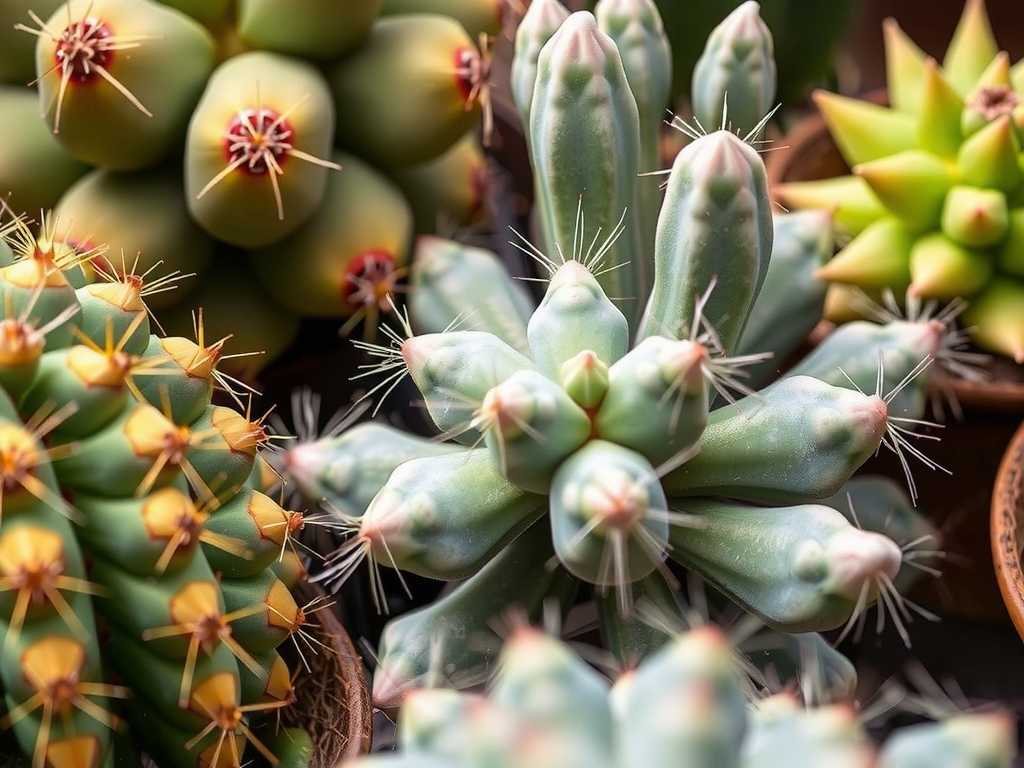
These cacti propagate primarily by producing offsets, or "pups," around their base, creating dense mounds or mats. This clustering growth behavior is a survival strategy to create microclimates and protect the central core. The Bunny Ears Cactus (Opuntia microdasys) and many Rebutia species are perfect examples.
- Care Implications: Their dense growth can trap moisture and hinder air circulation, increasing rot and pest risk. They benefit from more space than you initially allot and occasional thinning to maintain health. I learned this the hard way when a mealybug infestation spread like wildfire through a dense cluster. Now, I ensure ample spacing and routinely inspect the centers of clumps.
Epiphytic and Lithophytic Cacti: The Forest Dwellers
This category breaks the desert stereotype. Epiphytic cacti grow on trees in jungles, while lithophytic ones grow on rocks. They exhibit trailing, sprawling, or pendulous growth habits. The beloved Christmas Cactus (Schlumbergera bridgesii) and the dramatic Queen of the Night (Epiphyllum oxypetalum) belong here.
- Care Implications: Their needs are radically different. They require partial shade, more frequent watering, and humus-rich, well-aerated soil. My biggest pitfall was treating my Disocactus like a desert cactus, leading to shriveled stems. The fix was moving it to an orchid mix and a shadier, more humid location, after which it flourished.
Applying This Knowledge to Your Collection
Start by simply looking at your plants. Ask: Is it growing tall and vertical? Round and stout? Spreading out in a cluster? Hanging? Place it in one of the four habit groups. Then, research its specific genus within that framework—care needs will be highly consistent. Group plants with similar habits together on your shelf or in your garden. This not only creates visual harmony but simplifies your care routine dramatically.
What's the most common mistake when classifying cacti by growth habit? The most frequent error is confusing a tall, thin cactus that is etiolated (stretched from low light) for a true columnar type. True columnar cacti have robust, consistent stem diameter and closely spaced areoles. Always cross-reference the plant's current condition with its known ideal form.
Can a single cactus exhibit more than one growth habit? Yes, some species can transition or exhibit traits of two habits. For instance, a young Saguaro is globular before becoming columnar. Others, like some Opuntia, can be both clumping and eventually develop a more upright, treelike structure. Focus on the dominant, mature habit for long-term care planning.
Is this growth habit system reliable for all cacti? While it covers the vast majority, nature always has exceptions. Certain rare or specialized cacti might not fit perfectly. However, as a foundational framework for hobbyists and gardeners, it is exceptionally reliable and practical, far more so than trying to memorize individual care for dozens of species. It turns overwhelming detail into manageable, logical categories.
Understanding cactus growth habits is the bridge between generic care and true horticultural success. It moves you from guessing to knowing. By spending time observing your plants' forms—their vertical ambition, compact efficiency, social clustering, or trailing grace—you unlock the secret to their health. My two-week journey from confusion to clarity saved several plants and deepened my connection to this fascinating plant family. Start with observation, apply these simple categories, and watch your cacti respond with vibrant, resilient growth.





