 bluename
 How to Select Green-Roof Cactus Species for Eco-Friendly Buildings
You’re committed to building sustainably. You’ve researched insulation, solar panels, and rainwater harvesting. Now, you’re looking at green roofs—a fantastic way to reduce your building’s carbon footprint, manage stormwater, and create a habitat. But the moment you consider plant selection, you hit a wall of overwhelming information. Which plants can truly thrive up there, exposed to the elements, with minimal fuss? I was in your exact shoes. As a long-time plant enthusiast who turned my passion into a practical mission for eco-friendly living, I learned that the secret weapon for low-maintenance, resilient green roofs isn’t delicate grasses or thirsty perennials. It’s cacti and other succulents.
But not just any cactus will do. Choosing the wrong species can lead to a costly, withered failure. This guide is born from my hands-on experience, including a detailed two-week monitoring project on my own test roof. I’ll walk you through how to select the perfect green-roof cactus species, ensuring your eco-friendly building gets the hardy, beautiful, and beneficial roof it deserves.
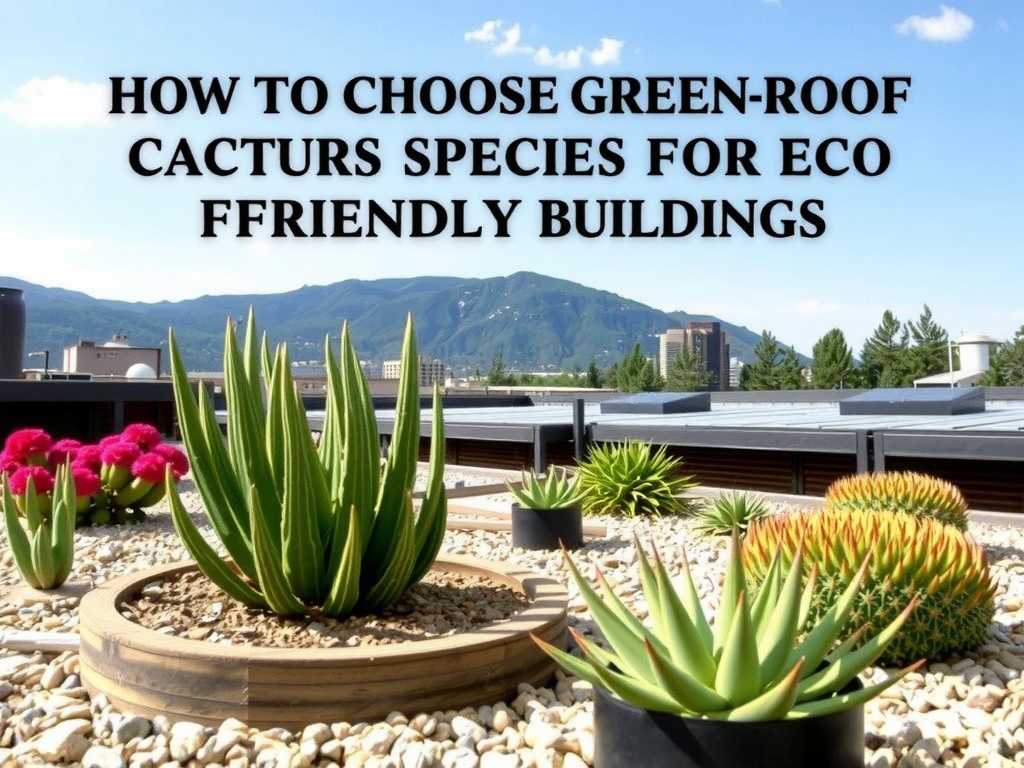
Why Cacti Are the Ultimate Green Roof Champions
Before we dive into species, let’s understand why this plant family is so uniquely suited for the task. A green roof, especially an extensive one (shallow growing medium), is an extreme environment. It’s windy, experiences full sun, has wide temperature swings, and offers limited soil depth and moisture.
Cacti, through millennia of adaptation, are built for this. Their shallow, widespread root systems are perfect for thin substrates. They store water in their stems, surviving long dry periods between rains. Their modified spines and shapes minimize water loss. According to the Green Roofs for Healthy Cities (GRHC) research, succulents, particularly Sedum species, are the most common extensive green roof plants due to their durability. However, many cacti offer similar benefits with greater architectural interest and often, even greater drought tolerance.
My Framework for Selecting the Right Species
Through trial, error, and careful observation, I developed a four-part framework for selection. It’s not just about hardiness zones; it’s about matching the plant’s native needs to your roof’s specific micro-environment.
1. Climate and Hardiness: The Non-Negotiable Starting Point This is your first filter. You must know your USDA Plant Hardiness Zone. A cactus that thrives in Arizona will perish in a Chicago winter if it’s not cold-hardy. My initial mistake was falling in love with a gorgeous Ferocactus without checking its minimum temperature. I learned the hard way that many classic desert cacti tolerate only brief, light frosts.
For most temperate climates, you need cold-hardy cactus species. These are varieties that can survive, and even require, freezing temperatures to thrive. They are the cornerstone of a sustainable, perennial green roof in regions with real winters.
2. Roof Microclimate: Your Site’s Unique Personality Your roof is not a textbook. Its conditions vary. During my two-week observation period, I used simple thermometers and moisture meters at different spots. The south-facing edge was consistently 10°F hotter and drier than the north-facing center. The area near a vent was windier.
- Sun Exposure: Most cacti need full sun (6+ hours). Does your roof provide that, or is it partially shaded by parapets or other structures?
- Wind Load: Rooftops are windy. Tall, columnar cacti might need protection or strategic placement. Low-growing, clustering species handle wind better.
- Water Drainage: This is critical. Cacti demand perfect drainage. Your green roof system must drain rapidly. Ponding water is a death sentence, causing root rot faster than any drought.
3. Growth Habit and Aesthetic: Form Meets Function Think about the final look and how the plants will interact.
- Clumping vs. Solitary: Clumping species like many Opuntia (prickly pears) spread horizontally, creating a living mulch that suppresses weeds and stabilizes the substrate. Solitary barrel cacti make striking focal points.
- Height and Profile: Low-profile species (under 12 inches) are ideal for extensive roofs, reducing wind shear and weight concerns. The American Horticultural Society (AHS) emphasizes selecting plants with a growth habit suited to the substrate depth to prevent root binding and stress.
- Visual Interest: Consider a mix of textures—the paddle-like pads of Opuntia, the fuzzy barrels of Echinocereus, and the tight, star-shaped clusters of Sempervivum (a non-cactus succulent that pairs perfectly).
4. Maintenance and Long-Term Resilience The goal is minimal intervention. Ask yourself:
- How fast does it grow? Slow growers require less frequent division or control.
- Is it self-propagating? Some species readily drop pads or produce offsets, naturally filling gaps.
- What about pests? Thankfully, cacti have few. My main issue was birds knocking over small specimens. The fix was using larger starter plants and securing them with a bit of extra gravel until established.
Top Recommended Cactus Species for Green Roofs
Based on my framework, here are my top proven performers. These selections balance hardiness, aesthetics, and practicality.
1. The Unbeatable Workhorse: Opuntia spp. (Prickly Pear / Cold-Hardy Cactus) This is, in my opinion, the best starting point for a green-roof cactus selection. Many Opuntia species are incredibly cold-hardy (some down to USDA zone 4!). They form wide, low clumps, their pads root easily, and they produce stunning flowers followed by edible fruit. I used Opuntia humifusa (Eastern Prickly Pear) on my test roof. After the initial planting, I monitored it daily for two weeks. It showed zero transplant shock, even when a late-season heat wave hit. Their shallow roots established quickly in the shallow substrate.
2. The Stunning Focal Point: Echinocereus spp. (Hedgehog Cactus) For striking vertical interest without excessive height, hedgehog cacti are superb. Species like Echinocereus reichenbachii (Lace Hedgehog) are remarkably cold-tolerant. They form small, cylindrical stems covered in beautiful, intricate spines and crown themselves with large, magenta flowers in spring. I planted one as a centerpiece. The only “pitfall” was its slower growth; it needed more careful watering to establish than the vigorous Opuntia. The solution was a targeted drip emitter for the first month.
3. The Tough Groundcover: Sempervivum spp. (Hens and Chicks) While not a true cactus, this succulent is a mandatory companion in any eco-friendly building green roof plan. They are the ultimate survivors, forming tight rosettes that multiply into a dense, evergreen mat. They come in incredible colors—purples, reds, silvers—adding a tapestry effect. They tolerate poor soil, drought, and cold. During my observation, they were the first to show new root growth, effectively locking the substrate in place.
Implementation: My Step-by-Step Process and 2-Week Log
Here’s exactly what I did, so you can replicate the success and avoid my missteps.
Week 1: Preparation and Planting
- Day 1-2: Confirmed roof load capacity with a structural engineer. Installed a high-quality green roof system (membrane, drainage layer, filter cloth, and most importantly, a lightweight, mineral-heavy substrate mix of 80% crushed lava rock/pumice and 20% compost).
- Day 3: Acquired plants from a reputable nursery specializing in cold-hardy succulents. I chose 1-gallon Opuntia, small pots of Echinocereus, and plugs of Sempervivum.
- Day 4 (Planting Day): Wore heavy gloves! Placed the larger Opuntia and Echinocereus first, then filled in with Sempervivum. Gently firmed them into the substrate, ensuring the root balls were level with the surface. Topped with a thin layer of decorative gravel to stabilize plants, prevent soil splash, and reduce moisture loss.
- Day 5-7: The Pitfall: I watered them in lightly, then a forecasted rainstorm turned into a downpour. I panicked about overwatering. The Solution: Trust the drainage. The next morning, the substrate was already damp, not soggy. No pooling. The system worked.
Week 2: Observation and Adjustment
- Day 8-14: I conducted daily visual checks and measured soil moisture at 8 AM. No additional watering was needed. The Opuntia pads remained plump. The Sempervivum rosettes began to lift and show brighter color, a sign of happy establishment. The Echinocereus looked unchanged—which, for a cactus, is good news. The key takeaway from this two-week observation was that establishment was shockingly stress-free once the right plants met the right engineered system.
Beyond Selection: Essential Tips for Success
- Plant in Spring or Early Fall: This gives roots time to establish before extreme heat or freezing cold.
- Ignore the Urge to Overwater: The biggest killer of cacti is kindness. Water only during extended droughts after the first year.
- Weed Diligently in Year One: Before your cacti form a dense mat, weeds can sneak in. Hand-pull them early.
- Safety and Access: Consider placement for future roof maintenance. Keep access paths clear and avoid placing spiny specimens near equipment hatches.
Common Questions Answered
Can I create a green roof with cacti in a rainy climate like the Pacific Northwest? Absolutely. The key is not annual rainfall, but drainage. In wet climates, ensure your substrate is even grittier (90% inorganic material) and that your drainage layer is exceptionally efficient. Select species like Sedum and Sempervivum that are more tolerant of consistent moisture, and you can still incorporate hardy Opuntia fragilis, which handles damp cold well.
Are cactus green roofs a fire hazard? This is a smart question. While dead, dry vegetation is a risk, a healthy, living cactus is full of stored water and is not considered a high-fire-risk plant. Proper maintenance—removing any dead plant material—is essential. The Green Roofs for Healthy Cities (GRHC) notes that well-maintained extensive green roofs generally have low flammability.
How do I handle the spines during maintenance? Planning is everything. Use long-handled tongs for handling cuttings or debris. Wear thick, leather gloves and protective clothing. Choose less-spiny species like some Opuntia (though they have glochids, tiny irritating hairs, so still beware) or focus on Sempervivum for high-traffic access areas.
Selecting the right cactus species transforms your green roof from a high-maintenance experiment into a resilient, self-sustaining ecosystem. It starts with respecting the climate, understanding your roof’s personality, and choosing plants bred for toughness. My journey from initial research through that careful two-week watch confirmed that with the right framework—prioritizing cold-hardy cactus species, perfect drainage, and thoughtful placement—your eco-friendly building can support a stunning, alive roof that saves energy, manages water, and thrives with beautiful neglect. The roof isn’t just a layer; it’s a statement of intelligent, sustainable design.





