 bluename
 How to Differentiate Clustered vs Solitary Cactus Species: A Hands-On Guide for Plant Enthusiasts
For years, I struggled to tell my cacti apart. I’d bring home a charming, solitary-looking specimen, only to find it sprouting a dozen eager pups a few months later, completely changing its form and outgrowing its pot. This wasn't just an aesthetic surprise; it affected everything from my watering schedule to my long-term space planning. The core challenge, I realized, was not just identifying a cactus, but fundamentally understanding its growth habit: is it a clustered cactus species or a solitary cactus species? This knowledge is crucial for proper care. Through my own trial, error, and a dedicated two-week observation project, I’ve developed a practical system to tell them apart with confidence.
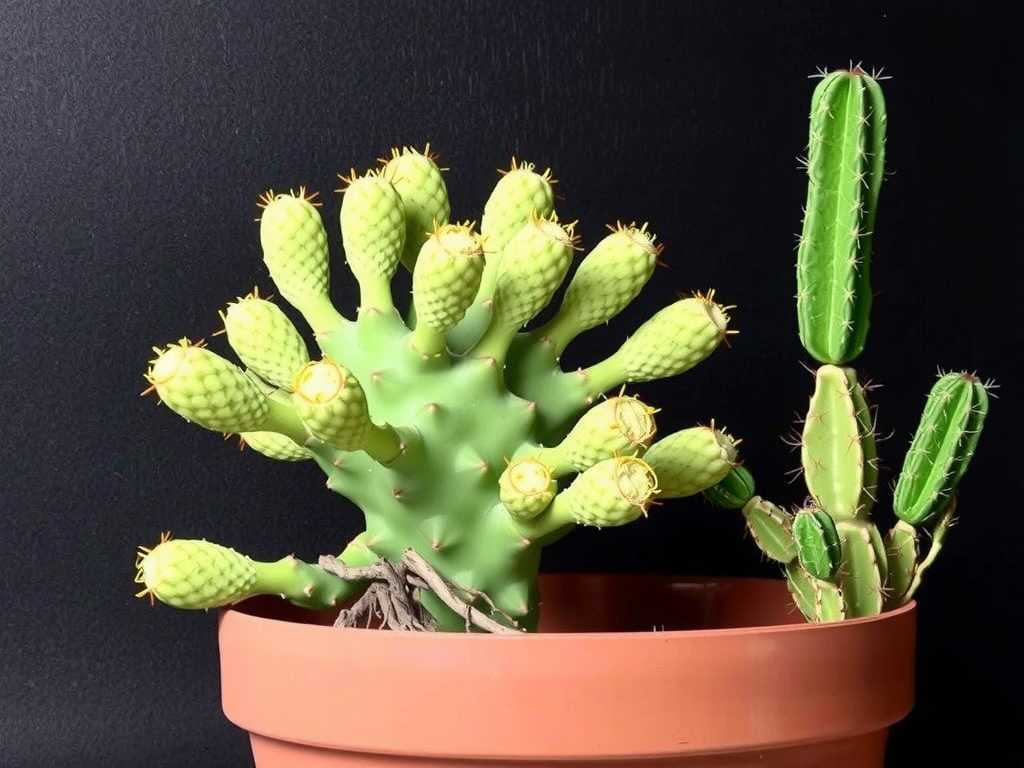
Understanding the Core Difference: Growth Habit as a Blueprint
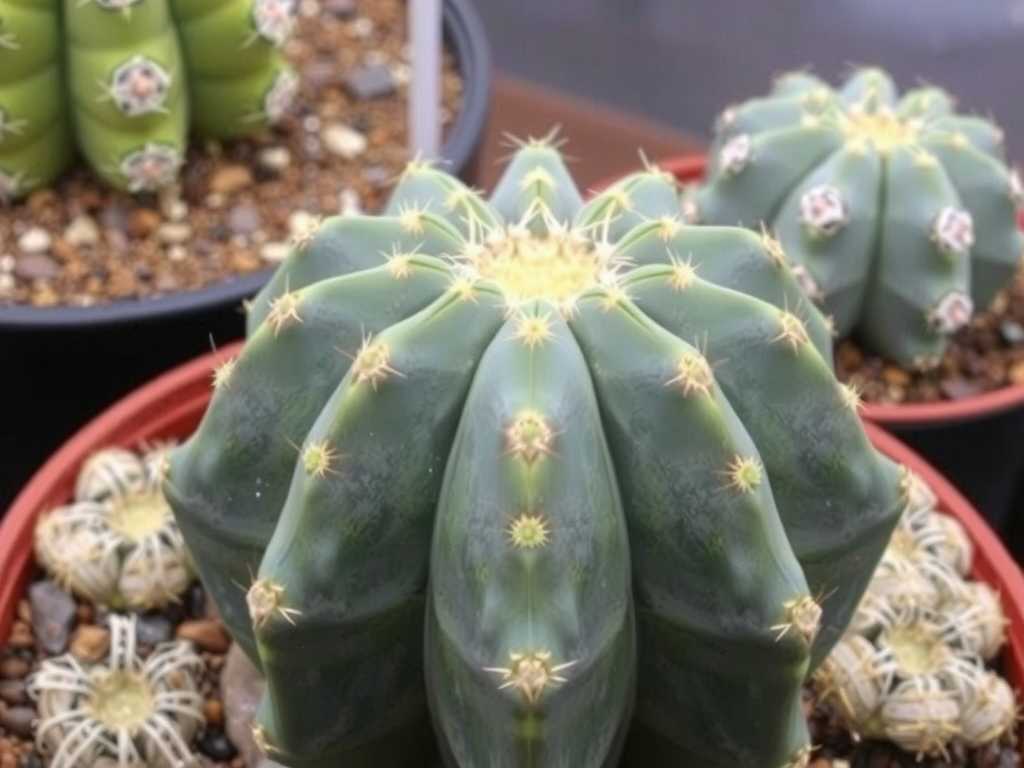
At its heart, the difference is in the plant's genetic blueprint for growth. A solitary cactus is programmed to maintain a single, dominant stem. It may branch as it matures, but these branches are typically arms or columns from the main body, not a profusion of independent bases. Think of the iconic Saguaro (Carnegiea gigantea) or many Ferocactus (barrel cacti). Their majesty lies in their singular, towering form.
In contrast, a clustered or clumping cactus is genetically predisposed to produce offsets, often called "pups" or "babies," from the base or sides of the main stem. These grow as fully independent yet connected plants, forming a dense colony. Classic examples include many Mammillaria and Echinopsis species. This isn't a random event; it's their default way of being.
My Two-Week Practical Identification Project
I decided to move beyond book learning and apply this to my own collection. I selected five unlabeled cacti from my shelf and committed to a 14-day daily observation log. My goal was to use both immediate visual cues and subtle growth signs to classify them.
Week 1: The Initial Visual Audit
The first step requires no tools, just a keen eye. I examined each plant for clear physical markers.
Looking for the Obvious: Pups and Basal Shoots This is the most straightforward sign. I carefully inspected the base of each cactus and the areoles (those fuzzy spots where spines emerge). A truly clustering cactus plant will often have small, bulbous growths emerging, even if tiny. One of my test subjects, a Mammillaria, had three minuscule green nubs at its soil line—a dead giveaway. A solitary cactus will have a clean, singular base, though older specimens may have occasional branches higher up.
Analyzing the Overall Silhouette and Shape I stepped back and looked at the overall form. Does it look like a single, unified sculpture? Or does it resemble a crowded family? A solitary Parodia I owned had a perfect, round, ribbed body standing alone. Another, which I suspected was an Echinopsis, already had a rounded, multi-headed appearance even in a small pot. The silhouette often tells the story before you even see individual pups.
Researching the Species (Your Pre-Purchase Power Move) Here’s the step I used to wish I’d done more consistently: quick research. During my project, I used my visual clues to make educated guesses and then cross-referenced with trusted sources like the Arizona-Sonora Desert Museum (ASDM) database or resources from the Cactus and Succulent Society of America (CSSA). If a plant is sold as Echinopsis chamaecereus (Peanut Cactus), I know it’s a prolific clumper. If it’s labeled Astrophytum ornatum, I expect a slow-growing, solitary star. This pre-emptive knowledge is the ultimate differentiator.
Week 2: Observing Growth and Environmental Response
The second week involved more subtle detective work, observing how they reacted to their environment.
The Role of Light and Stress Responses I made a slight, careful adjustment to their light exposure. I’ve noticed that some cacti, when slightly stressed (e.g., by a bit more direct sun or a tighter root zone), may initiate pupping as a survival mechanism to propagate. However, a genetically solitary cactus will typically respond by thickening its stem or changing color rather than spontaneously producing basal offsets. One of my test subjects, a barrel-type, reacted to brighter light by developing a richer green hue and firmer texture—no pups in sight.
Root Inspection: Proceed with Caution This is an advanced step and must be done with extreme care to avoid root damage. For one plant that was due for repotting anyway, I gently checked its root structure. Some clustering species have a more fibrous, spreading root system ready to support multiple stems. Solitary types often have a more centralized taproot or root ball. This isn't a foolproof method, but it can support other evidence. I only did this on one plant and strongly advise against doing it purely for identification; the risk of shock is high.
The Pitfalls I Encountered (And How to Solve Them)
My project wasn't without mistakes. Here’s where I stumbled and how I corrected course.
Mistake 1: Conforing Branching with Clustering. Early on, I misidentified a mature Myrtillocactus geometrizans that had started to branch as a clumper. Its branches were tall, vertical, and part of the main structural stem. I learned that true clustering involves new, independent growth points from the base or lower areoles, not architectural branching from the apex. The solution? Trace the new growth back to its origin. If it comes from soil level or a very low areole, it's likely a pup. If it emerges high up as a continuation of the stem's pattern, it's branching.
Mistake 2: Overwatering-Induced Pupping. One of my cacti suddenly produced a pup after I accidentally overwatered it. I initially thought I had misclassified it. However, upon consulting an article by a contributor to the Royal Horticultural Society (RHS), I learned that excessive water or fertilizer can sometimes trigger a stress-based pupping response even in solitary species. The key is to assess the overall growth history. Was it solitary for years before this one event? That’s likely stress. Has it consistently produced multiple heads from the start? That’s its natural habit.
Mistake 3: Relying Solely on Nursery Labels. I had a plant labeled simply as "Cactus." It was solitary when small. Assuming it would stay that way, I placed it in a tall, narrow pot. Two years later, it began clumping vigorously, and the pot became unstable. The fix is to use the visual and research steps above to verify the label. When in doubt, choose a pot that accommodates both possibilities—wider than it is tall.
Why This Differentiation Matters for Care
Understanding whether you have a solitary versus clumping cactus directly translates to better plant health.
Potting and Space Planning Solitary cacti often do well in pots that complement their deep root systems. Clustering species need wider, bowl-shaped pots to accommodate their outward spread. My failed tall-pot experiment taught me this the hard way.
Watering and Feeding Schedules A dense cluster creates its own microclimate and can shade its soil, potentially leading to slower evaporation. I now water my clumpers more carefully, targeting the soil and avoiding water pooling in the center of the cluster, which can cause rot. Solitary plants offer more straightforward soil exposure.
Propagation Strategies Want more plants? With a clumper, you can gently remove offsets for propagation. With a true solitary cactus, propagation typically requires seeds or cuttings, a slower and more challenging process. Knowing this sets realistic expectations.
Frequently Asked Questions
Can a solitary cactus ever become clustered? Rarely through its natural genetic program, but it can appear to cluster due to injury to the growth point (apical meristem). If the main tip is damaged, the plant may produce multiple side branches as a survival tactic, which can look like a cluster. However, its innate tendency remains solitary.
Is one type easier to care for than the other? Not necessarily easier, but the challenges differ. Clustering types require more vigilance regarding air circulation and rot prevention within the dense growth. Solitary types can be more sensitive to overwatering in their core body. Both thrive on neglectful attention—plenty of light and infrequent, deep watering.
My cactus hasn’t pupped, but it’s sold as a clumping variety. Why? Age and environment are key. A young clustering cactus may not pup until it reaches maturity or feels adequately established. Ensuring it receives sufficient light and a slight root-bound state can sometimes encourage its natural clumping behavior, but patience is essential. Don’t force it; trust its biology.
Identifying whether your cactus is a solitary sentinel or a social clumper transforms your care routine from guesswork to a informed practice. It starts with a keen visual inspection, is reinforced by knowledgeable research from authoritative sources, and is confirmed through patient observation. By understanding their fundamental growth habits—the very essence of what makes a clustered cactus species or a solitary cactus species—you’re not just naming your plant; you’re learning its language and setting it up for a lifetime of healthy, predictable growth. My two-week journey turned confusion into clarity, and now I can look at any cactus and see not just its spines, but its story.





