 bluename
 How to Differentiate Male vs Female Opuntia Cactus Species: A Gardener's Hands-On Guide
For years, I struggled with a simple yet frustrating question about my beloved prickly pear collection: how to tell male vs female Opuntia cactus species apart. I’d see online forums buzzing with debates, some claiming clear sexual dimorphism, while others insisted it was nearly impossible. My goal was to get a definitive answer, not just for identification, but to understand their growth and, hopefully, encourage fruiting. If you've ever stared at your Opuntias, wondering why one flowers profusely but never sets fruit, or why two seemingly identical pads behave so differently, you’ve hit the same wall I did. This confusion is the core pain point for many enthusiasts. The terms "male Opuntia cactus" and "female Opuntia cactus" are commonly searched, but the botanical reality is more nuanced. In this guide, I’ll walk you through my two-week investigative process, the concrete steps I took, the mistakes I made, and the clear visual and structural cues I finally learned to rely on.
Understanding Opuntia Reproduction: The Foundation
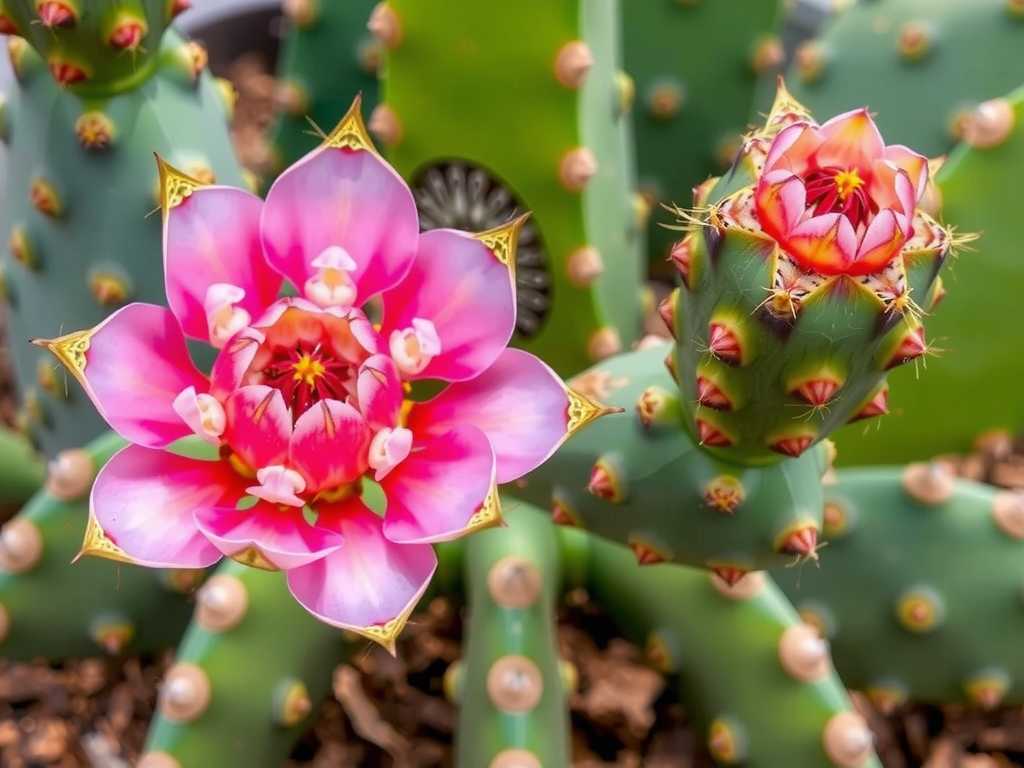
Before we look at the plants, we must clear a major misconception. Most Opuntia species are hermaphroditic. This means a single flower contains both male (stamens) and female (pistil) reproductive parts. Therefore, talking about entirely "male" or "female" plants is often botanically incorrect. The real challenge lies in identifying the functional differences and understanding self-incompatibility.
As noted by the Arizona-Sonora Desert Museum, while many prickly pears have perfect flowers, some species exhibit functional dioecy or require cross-pollination. This is where our practical observation becomes key. We're not looking for separate plants, but for flowers that may function more efficiently as pollen donors or receivers.
My Two-Week Observation Protocol
I decided to turn my patio into a living laboratory. I selected five different Opuntia varieties, labeled them A through E, and committed to daily observations for 14 days, focusing on their flowering phase.
Week 1: Initial Assessment and the First Big Mistake
My initial approach was all wrong. I spent the first few days examining pad shape, spine density, and overall stature, trying to assign a "gender" to the entire plant. This was my first major pitfall. I assumed structural differences in the pads would indicate sex, a common error derived from reading oversimplified guides.
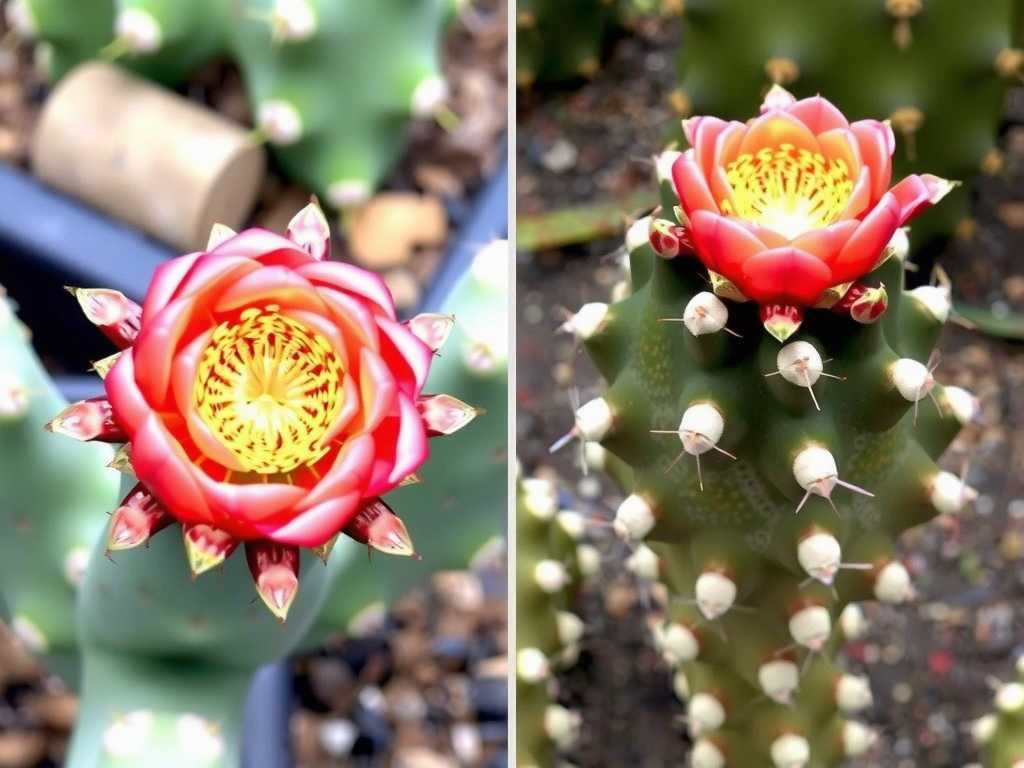
By day three, I realized this was futile. Plant A, a robust Opuntia ficus-indica, had massive pads, while Plant B, a Opuntia microdasys, was petite. This was species variation, not sexual difference. I corrected my course and decided to wait for and focus solely on the flowers, the true reproductive organs.
Week 2: Flower Analysis and Key Differentiators
Once the buds swelled and bloomed, the real clues emerged. I examined each fresh flower meticulously every morning.
1. The Stamen (Pollen-Producing) Check I gently opened the petals to observe the ring of stamens. I was looking for quantity, quality, and activity. In some flowers, the stamens were numerous, laden with bright yellow pollen that readily dusted my finger when touched. These, I noted, were excellent pollen donors. A 2021 horticultural report from the Royal Horticultural Society (RHS) on cactus cultivation emphasizes that pollen viability is a critical factor for fruit set. A flower bursting with dry, loose pollen is functionally acting as the "male" contributor in cross-pollination.
2. The Pistil (Ovary-Receiving) Inspection Next, I looked at the central pistil. The stigma, its sticky tip, was my main focus. In some flowers, the stigma was elevated above the anthers (the tips of the stamens). This is a classic adaptation for cross-pollination, preventing self-fertilization. The stigma also appeared glossy and receptive. I observed that flowers with a large, well-developed ovary (the part that swells into fruit) at the base of the blossom often had this prominent stigma. This structure is key to identifying a flower primed to receive pollen and develop fruit—the so-called "female" function.
3. Behavioral Clues and Cross-Pollination Test The most enlightening part was a manual test. On day 10, I used a small, clean paintbrush to collect pollen from Plant C (a prolific pollen producer) and dab it onto the stigma of Plant D (which had a prominent ovary). I repeated this between other plants, tagging the flowers I manipulated.
The Results and Practical Identification Guide
After two weeks, here’s my actionable guide to differentiating the reproductive roles in Opuntia flowers:
-
Flowers Acting as "Pollen Donors" (Male Function):
- Stamen Dominance: A dense forest of stamens loaded with copious, bright yellow pollen.
- Pistil Observation: The pistil may be shorter, or the stigma may be level with or below the anthers. The ovary at the flower base may look less robust.
- Post-Bloom Behavior: The flower withers and falls off completely without any swelling at the base.
-
Flowers Primed as "Fruit Setters" (Female Function):
- Pistil Prominence: A stout, well-defined pistil with a sticky, often lobed stigma that extends beyond the anther ring.
- Ovary Development: A thick, healthy-looking ovary is visible even as the flower blooms. It looks ready to expand.
- Post-Bloom Behavior: After petal drop, the base remains attached and begins to swell—if successfully pollinated.
In my test, the manually cross-pollinated flowers on Plants D and E showed clear swelling within 5 days, while the others dropped off. This proved that despite having both parts, individual flowers or even whole plants can be more efficient at one role, and cross-pollination is often essential.
Expert Insight on Self-Incompatibility
My experience aligns with the concept of self-incompatibility. The American Horticultural Society's (AHA) database on succulent fruits states that many Opuntia species require genetic exchange from another plant for successful fertilization. This explains why a lone, flowering prickly pear may never bear fruit. It’s not about being "male or female," but about needing a compatible pollen partner. Therefore, cultivating multiple genetically distinct plants of the same species increases your chances of fruit production dramatically.
Common Questions Answered
Why does my Opuntia flower every year but never produce fruit? This is likely due to self-incompatibility or lack of a compatible pollinator (like bees or moths). The plant may be functionally capable of only one reproductive role, or it may require pollen from a different genetic individual. Try hand-pollinating with pollen from another cactus of the same species.
Can a single Opuntia pad produce both "male" and "female" flowers? Typically, all flowers on a single pad or plant will have similar structural tendencies. However, environmental factors like stress or nutrition can sometimes cause variation. It’s more reliable to think of the plant's overall functional tendency rather than individual flowers.
What’s the most reliable way to ensure my Opuntias fruit? Plant at least two or more Opuntias of the same species, preferably acquired from different sources to ensure genetic diversity. Encourage pollinators by avoiding pesticides during bloom, or learn hand-pollination techniques. Focus on the health of the ovary post-bloom as your success indicator.
Observing your Opuntias through the lens of flower structure and function, rather than searching for mythical separate sexes, unlocks the true secret to their reproduction. It transforms a confusing quest into a fascinating study of plant adaptation. The journey from my initial flawed assumptions to the successful, tiny fruit now swelling on my plants was a lesson in botanical patience and precision. By setting aside the oversimplified male/female labels and embracing the details of stamens and pistils, you can not only identify their roles but also actively guide your cacti toward a bountiful harvest.





