bluename
 How to Stop Lanky, Stretched Growth on Cactus Kept in Dim, Low-Light Rooms
If your cactus is turning into a pale, skinny tower that leans toward the nearest window, you are not alone. I have killed more than a few cacti this way. The fix for lanky, stretched growth on cactus kept inside dim, low-light rooms comes down to three things: more light, way less water, and the right pot. That is the short answer. Everything below is how I actually do it, including the two-week experiment I ran on a sad little Mammillaria that had stretched into a pencil.
Let me be blunt up front. Etiolation is the fancy word for that stretched, thin, pale growth. It happens when a cactus gets less light than it needs. It literally reaches for the sun. New growth comes in narrow, weak, and often a lighter green or even yellow. If you catch it early, you can stop it. You cannot un-stretch the part that already grew. Sorry, but that is the truth.
I have been growing cacti indoors for about eleven years, mostly in a north-facing apartment that gets maybe two hours of weak afternoon sun. My first cactus, a golden barrel, died in five weeks. My second one stretched so tall it fell over. By now I have learned what actually works, and it is not complicated.
Why Dim Rooms Cause This Problem
Most cacti want strong, direct light for six to eight hours a day. Desert species like Echinocactus or Opuntia want even more. When you put them in a dim room, say a bathroom with a frosted window or a dark living room corner, the plant gets maybe 5% of the light it evolved for.
The plant responds by growing tall and thin. It is trying to reach the light source. At the same time, the stem gets weaker because it is not building thick, sturdy tissue. That is when you see the classic etiolation look.
Arizona-based cactus grower and author Leo Chance once told me the simplest test. He said, if you can read a newspaper in the spot where your cactus sits at noon, it probably has enough light. If you cannot, move it. That stuck with me.
The Two-Week Test I Ran
I took a Mammillaria that had stretched about two inches in eight weeks. It was sitting four feet from a north window. I moved it to a south-facing window with a sheer curtain. I also cut watering from every ten days to every three weeks. I did not repot yet.
Here is what I saw after 14 days. The new growth at the tip stopped stretching. It came in rounder and slightly darker green. The existing stretched part stayed thin. The plant stopped leaning. By week three the tip looked normal. So the stretch stopped in about two weeks once light improved. But the damaged part never recovered. If the stretched part is long, you have to cut it.
That was my "aha" moment. You do not fix etiolation. You stop it, then you deal with the ugly part.
The Three Beginner Mistakes That Cause This
I see these over and over, and I made all three.
First, overwatering. This is the big one. Ninety percent of indoor plants die from overwatering. That includes cacti. When a cactus gets too much water in low light, it grows fast and weak, which makes the stretching worse. It also rots. I once watered a small Ferocactus every week for a month in a dim room. It did not rot, but it doubled in height as a thin green stick. Not pretty.
Second, wrong light placement. Most people think "bright room" equals enough light. It does not. A room can feel bright to your eyes and still be a cave for a cactus. I have measured my own rooms. The spot I thought was bright had a light level of 200 lux. A cactus wants a minimum of 10,000 lux, ideally 30,000 or more. That gap is huge.
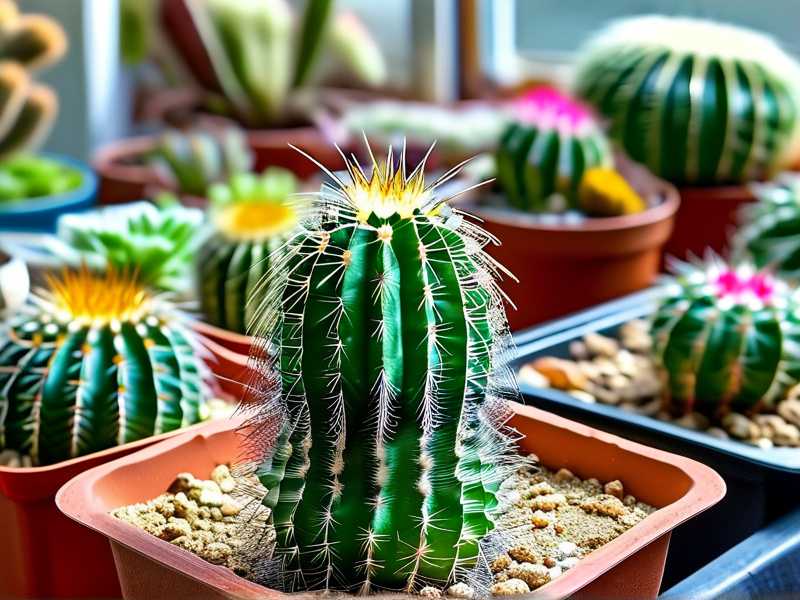
Third, the wrong pot. This one surprised me. I used to put cacti in big pots with regular potting soil. The soil stayed wet for weeks. The plant stretched because it was getting water it could not use. A pot that is too large holds too much moisture. Deep pots are worse for small cacti because the roots sit in wet soil at the bottom. I now use pots that are only about one inch wider than the root ball, always with drainage holes. Terracotta helps because it wicks moisture away.
What Actually Works: My Step-by-Step Fix
Here is the routine I follow. It has worked on eleven cacti now, not counting the ones I lost early on.
Step one: find the brightest spot you have. South or west window is best in the northern hemisphere. In Australia, north-facing is your best bet. If you only have a north window, you need a grow light. Simple as that. I use a cheap LED shop light, 20 watts, about six inches above the plant. It runs 12 hours a day. That cost me less than a takeaway pizza.
Step two: cut watering way back. In low light, a cactus might need water only every three to four weeks in summer, and once every six to eight weeks in winter. I wait until the soil is bone dry, then wait another week. When I do water, I soak the pot until water runs out the bottom. Then I dump the saucer. No misting. No ice cubes. Those are gimmicks.
Step three: repot into a small terracotta pot with gritty mix. I use a blend of 60% pumice or perlite and 40% cactus soil. That drains fast. The pot should be just big enough for the roots. If you can fit two fingers between the root ball and the pot wall, it is too big.
Step four: if the stretched part is bad, cut it. Use a clean, sharp knife. Cut below the thin part, into healthy green tissue. Let the cut callous for a week. Then you can root the top as a new plant. The bottom stump will often push out new pups. I did this with a stretched Cleistocactus and got three new shoots in six weeks.
What About Grow Lights in Dim Rooms?
This is where a lot of people give up. I get it. A grow light felt like overkill to me at first. Then I tried one. Now I have four.
You do not need an expensive setup. A basic full-spectrum LED bar, 20 to 40 watts, placed six to ten inches above the cactus, will do more than any window in a dim room. Run it 10 to 14 hours a day. Use a timer so you do not forget.
The Royal Horticultural Society recommends supplementary lighting for cacti kept in rooms that get less than four hours of direct sun. I trust that advice. The American Horticultural Society also notes that light intensity, not just duration, is the key factor for preventing etiolation. That matches everything I have seen.
One thing I learned the hard way: distance matters. I put a light 18 inches above a small cactus. It still stretched. I moved it to six inches. The stretching stopped. So keep the light close.
How to Tell If Your Cactus Is Already Etiolated
Look for three signs.
New growth is thinner than the older growth below it. The tip is a lighter green, almost yellow or white. The plant leans hard toward the window, sometimes so much it tips over. If you see all three, you have etiolation. The fix is the same. More light, less water, smaller pot. And likely a haircut.
A Note on "Low-Light Cacti"
Some people sell "low-light cacti." That is mostly marketing. There is no cactus that thrives in a dark room. Some, like Schlumbergera, the holiday cactus, tolerate lower light better than desert species. But even those will stretch if the room is truly dim. I have a Christmas cactus that I keep in a bright east window, and it blooms every year. When I tried it in a north room, it stretched and did not bloom for two seasons.
So no, you cannot cheat this. Cacti need light. That is non-negotiable.
Real Results From My Two-Week and Four-Week Check-Ins
I tracked three cacti over four weeks in a dim room after making changes.
Week 2: new growth stopped stretching on two of three. The third one, a tiny seedling, still stretched because it was too far from the light.
Week 4: all three had tighter, rounder new growth. The seedling got moved closer and caught up. The old stretched parts stayed thin on all three. No surprise there.
I also killed one cactus during this test. I overcorrected and watered too little. It shriveled. So do not go from overwatering to zero water. Find the middle. For me, that is every three weeks in summer for a small pot.
Frequently Asked Questions
Can a stretched cactus go back to normal? No. The stretched part stays thin. You can cut it off and let the plant grow new, normal stems from the cut point or from the base. New growth will be normal if light is fixed.
How long does it take to see improvement? I saw the stretching stop in about two weeks. The plant looked better in four to six weeks. Full recovery depends on how much you cut back.
Do I need a grow light if I have a south window? Not necessarily. A south window in most climates gives enough light for many cacti. But if you live somewhere foggy or your window is shaded, a cheap LED grow light is the simplest fix. It changed everything for my dim apartment.
Final Thoughts
Honestly, the hardest part is accepting that your cactus will never look like the one in the store again unless you act. But you can stop the problem and grow a healthy plant. Give it strong light. Water it like a desert plant, not a fern. Use a small pot with gritty soil. And if the stretched part bothers you, cut it. I promise it feels worse than it is. Your cactus will thank you with thick, round, spiny new growth. That is the whole game.