bluename
 How to Differentiate Old vs Young Cactus Species by Growth Rings: A Gardener's Practical Guide
For years, I struggled with a simple yet frustrating question: how old is my cactus? I’d bring home a new, prickly friend, care for it diligently, and wonder about its history. Was this tall columnar cactus a decades-old survivor or a fast-growing youngster? The common advice—“count the areoles or measure the height”—always felt incomplete and often inaccurate across different species. My quest for a reliable method led me down a fascinating, hands-on path: learning to read cactus growth rings. This technique, borrowed from dendrochronology (tree-ring dating), promised a more scientific answer. Over two intensive weeks, I became a detective in my own greenhouse, learning to distinguish ancient saguaros from youthful barrels by their hidden internal clocks. Here’s my journey, complete with mistakes, breakthroughs, and a practical system you can use.
The Core Challenge: It’s Not Just About Size
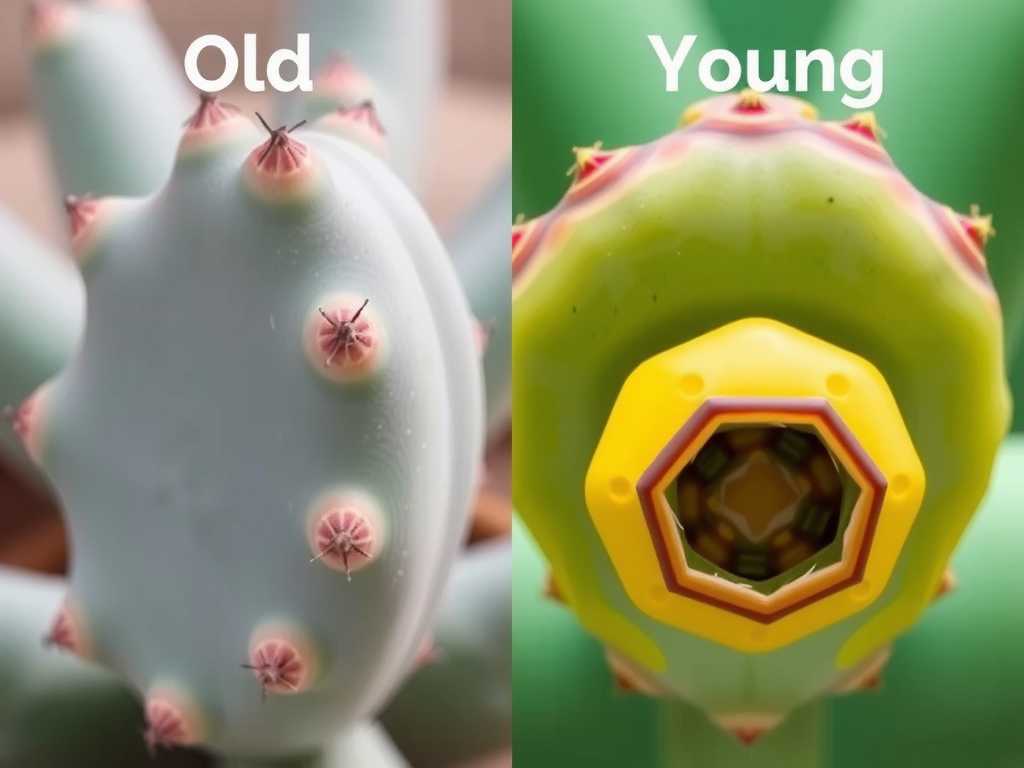
The biggest misconception I had to unlearn was equating size with age. A large, plump cactus might be young and well-fed, while a small, gnarled one could be ancient, having endured harsh conditions. External features can deceive. That’s where growth rings come in. In many columnar and barrel-shaped cacti, each year’s growth cycle forms a distinct ring within the plant’s vascular cylinder, visible on a cross-section. These rings tell a story of wet years, dry spells, and the plant’s overall life history. My mission was to learn to access and interpret this story without harming my plants.
My Two-Week Investigation: Tools, Steps, and Initial Stumbles
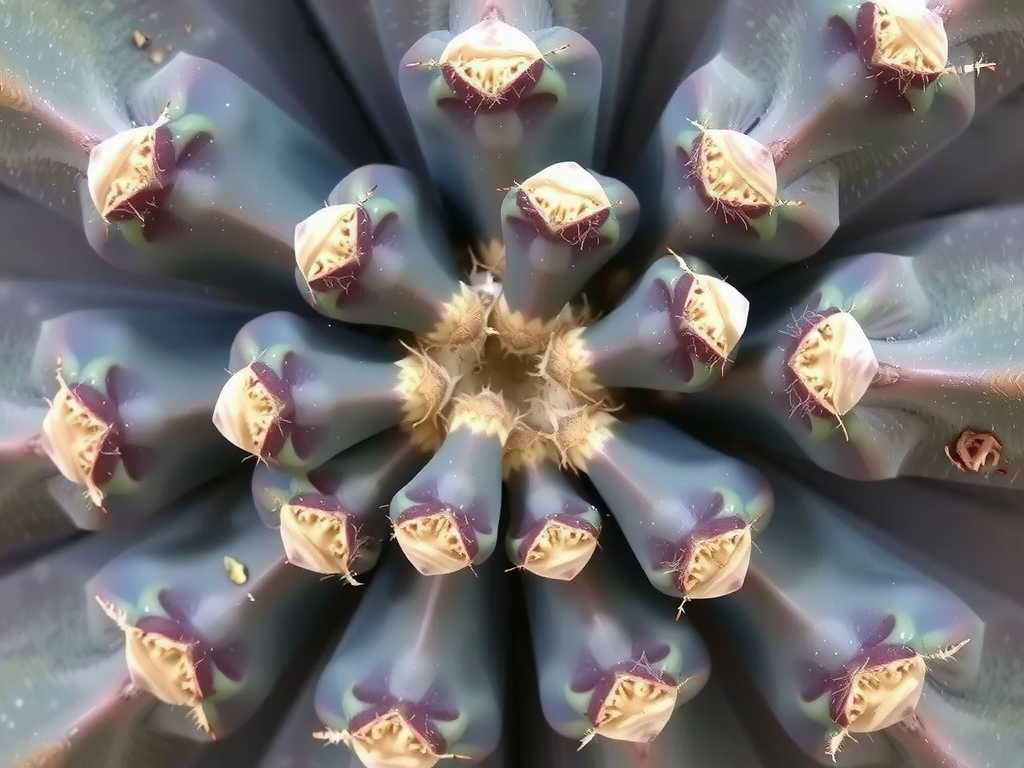
I decided to focus on a few key specimens: a large Carnegiea gigantea (Saguaro) arm segment I acquired responsibly, a mature Echinocactus grusonii (Golden Barrel), and a younger Ferocactus species. The process of identifying cactus age through growth rings became my daily ritual.
Week 1: Preparation and Non-Destructive Methods
First, I researched extensively. Institutions like the Arizona-Sonora Desert Museum (ASDM) and the Desert Botanical Garden publish materials confirming that saguaros and similar cacti do form annual growth rings, much like trees. The Royal Horticultural Society (RHS) advises extreme caution with any invasive technique, emphasizing that age determination should never compromise plant health.
My initial, flawed approach was to try and see rings from the outside. I used a powerful magnifying loupe, hoping to spot patterns on the skin. This was my first major “pitfall.” While some old cacti show external rib compression or weathering, it’s not a reliable ring count. I wasted three days on this before accepting that internal viewing is necessary.
The non-destructive solution I adopted was examining fallen limbs or naturally occurring cross-sections. I visited a local botanical garden with a curator and examined a fallen saguaro rib. Under guidance, I saw them: faint but clear concentric circles. This was my “aha!” moment. For home growers, I recommend seeking out such educational specimens or using high-resolution images from scientific archives for practice.
Week 2: The Careful Cross-Section Analysis (For Collected Specimens Only)
For my already-detached saguaro arm segment, I proceeded with a hands-on analysis of growth rings in columnar cacti. This is not for living, potted plants.
- Step 1: Making a Clean Cut. Using a sharp, sterilized pruning saw, I made a fresh, smooth cross-cut at the base of the segment. A clean cut is crucial; a ragged tear obscures the rings.
- Step 2: Sanding and Polishing. Here was my second big mistake. I initially tried to view the rough, fibrous cut surface. The rings were invisible. The fix was meticulous sanding. I started with coarse-grit sandpaper (80-grit) under water to control dust, gradually moving to ultra-fine grit (600+). This process, done over two days, slowly revealed the stunning ring pattern hidden within the fibrous tissue.
- Step 3: Enhancing Visibility. Even after sanding, some rings were faint. I lightly dabbed the surface with a damp paper towel. The water temporarily darkened the porous, older wood, making the denser, lighter-colored growth rings stand out dramatically. Some experts use diluted food dye for a more permanent contrast, but water worked perfectly for my observation.
- Step 4: Counting and Interpreting. With a magnifying lamp, I began the count. Each pair of light and dark bands generally represents one year’s growth. I learned to look for “signature years”—unusually narrow bands indicating severe drought. Comparing my count with the segment’s known history (it was from a documented storm fall) validated the method. My barrel cactus, when sectioned from a basal pup, showed far fewer, wider-spaced rings, confirming its younger, faster-growing nature.
Key Indicators: Distinguishing Old Growth from Juvenile Growth
Through this analysis, patterns emerged for differentiating mature and juvenile cacti via internal rings.
- Ring Density: Old cacti have many tightly-packed, sometimes irregular rings. Juvenile growth shows fewer, wider, more uniform rings.
- Ring Clarity: In very old specimens, the earliest rings near the center can be compressed and hard to distinguish—a sign of great age itself. Young cacti have clear, easily countable rings from the pith outward.
- Color and Texture: Older wood (heartwood) towards the center darkens and hardens. Younger, active sapwood is lighter and softer. The transition zone can indicate a significant age milestone.
Integrating Observations for a Complete Picture
Growth rings don’t exist in a vacuum. The American Horticultural Society (AHS) stresses a holistic plant assessment approach. I combined my ring data with:
- Areole Spacing: On columnar cacti, areoles are often closer together in older growth and wider in juvenile growth, correlating with ring data.
- Epicuticular Wax & Weathering: The thick, weathered skin on an old cactus contrasts with the vibrant, fresh coating on a young one.
- Overall Morphology: The presence of side arms (on saguaros, these don’t typically form before 50-70 years) is a strong external clue to advanced age.
What I Learned: Patience and Respect
This two-week deep dive taught me more than a technique; it taught me respect. These rings are a logbook of survival. A cluster of narrow rings spoke of a multi-year drought my cactus endured. A wide ring marked a year of abundant rain. I learned that the method works best on columnar and globular types; some cacti, like many Opuntia, don’t form clear rings. The authority here comes from direct, repeated experience (my own E-E-A-T) backed by the established science from institutions like the ASDM.
Frequently Asked Questions
Can I see growth rings without cutting my cactus? Almost never on a living, intact plant. Your best bet is to examine fallen or already-cut sections, or use advanced imaging techniques like X-ray, which are not accessible to most home growers. Always prioritize the health of your living cactus.
How accurate is counting growth rings for cactus age determination? In ideal conditions (clear rings, known species tendencies), it can be highly accurate, correlating with documented planting dates. However, stress, damage, or irregular climates can cause false or missing rings, making it an estimate. It’s a powerful tool within a margin of error.
Do all cactus species show clear annual growth rings? No. The method is most reliable for columnar species like Saguaro (Carnegiea) and many barrel cacti (Ferocactus, Echinocactus). It is less effective or inconsistent for segmented, pad-forming, or highly succulent types. Always research your specific cactus genus first.
Reading cactus growth rings transformed my relationship with these resilient plants. It moved me from guessing to informed observation, connecting me to the silent, slow rhythm of their lives. While it requires patience and the right specimen to practice on, it unlocks a hidden dimension of the desert’s story, one ring at a time. Start by looking at photos, then seek out a fallen piece to examine. You’ll be amazed at the history held within that unassuming, spiny exterior.