bluename
 How to Differentiate Monocarpic vs Polycarpic Cactus Species: A Grower's Practical Guide
For years, I struggled with a heartbreaking cycle in my cactus collection. I’d nurture a stunning specimen for what felt like a lifetime, only to watch it bloom magnificently and then, inexplicably, begin to die. I felt like I had failed, that my care was somehow lacking. It wasn't until I lost a magnificent Agave americana that I dug deeper and discovered the crucial concept I had been missing: the fundamental life cycle difference between monocarpic and polycarpic cactus species. Understanding this isn't just academic; it's the key to managing your expectations, planning your garden's future, and avoiding the disappointment of losing a beloved plant you thought was dying from neglect. This guide is born from my own two-week investigative journey into my collection, where I learned to spot the signs, propagate strategically, and appreciate the unique beauty of each life strategy.
Why Knowing the Difference Saves You Time and Heartache
Before we get into the identification, let's clarify the core terms. Monocarpic cacti and succulents flower once, set seed, and then complete their life cycle. This "bloom of death" is a natural, planned finale, not a failure on your part. In contrast, polycarpic cactus species are the repeat performers. They flower and fruit season after season, for many years, often for decades. The confusion and pain arise when we treat a monocarpic plant like a polycarpic one, investing years of care without a plan for its inevitable end. My mission became clear: I needed a reliable method to differentiate them without waiting for the fatal bloom.
My 2-Week Hands-On Investigation Plan
I decided to turn my entire collection into a living laboratory. I set aside two weeks for intensive observation, documentation, and research. My goal was to create a practical checklist any enthusiast could use.
Week 1: The Initial Audit and Research Phase
My first step was to accurately label every plant. I used the RHS (Royal Horticultural Society) Plant Finder and databases from specialist cactus societies to verify botanical names. Common names are notoriously misleading. I created a simple spreadsheet with columns for: Botanical Name, Common Name, Growth Habit (single stem, clustering, tree-like), and "Life Cycle Suspected (M/P)."
I then consulted authoritative sources like the Cactus and Succulent Society of America (CSSA) journals. An expert article I found emphasized that while many agaves and sempervivums are classic monocarpic examples, the trait appears in specific cactus genera, notably some Mammillaria, Neolloydia, and certain Echinopsis. This was my first "aha" moment—it's genus and species-specific, not a universal rule for an entire family.
Week 2: Physical Examination and Growth Pattern Analysis
This was the hands-on week. I put on my gloves and examined each plant for physical clues, focusing on three key areas.
1. Analyzing the Growth Form and Pup Production. This became the most telling sign. I noticed a clear pattern. Plants I suspected were monocarpic cacti, like my Agave and a large Sempervivum, invested all their energy into a single, spectacular reproductive event. They often grew as a solitary rosette for years. Crucially, many prepared for their end by producing a wealth of "pups" or offsets at their base well before flowering. This was their survival strategy. My polycarpic plants, like my Echinocactus grusonii (Golden Barrel) and various Opuntia, showed no such urgency. They grew steadily, sometimes producing offsets, but these seemed related to general growth, not a pre-death proliferation.
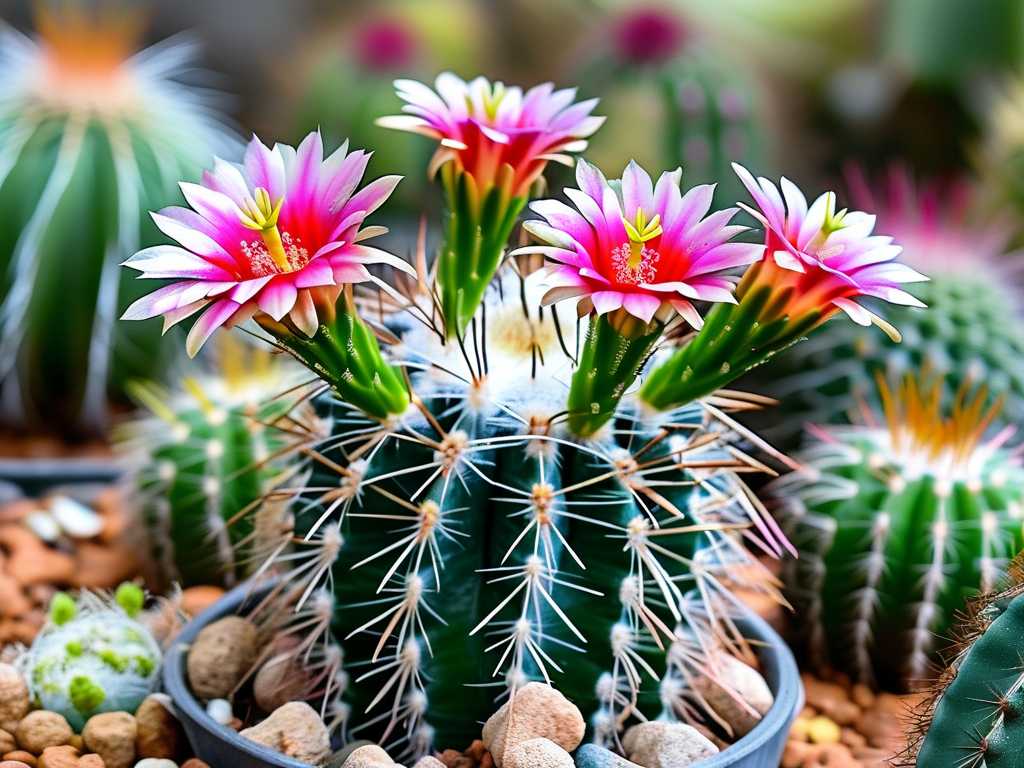
2. Inspecting the Apical Meristem (The Growing Tip). For columnar cacti, this was insightful. In a true monocarpic flowering cactus, the apical meristem—the tip where growth occurs—transforms entirely into the flowering structure (an inflorescence). Once flowering and seeding are complete, that growth point is gone, and the plant cannot continue vertical growth. My polycarpic cacti, however, produced flowers from the sides, areoles, or new cephaliums, leaving the main growing tip intact to continue leading growth for future seasons.
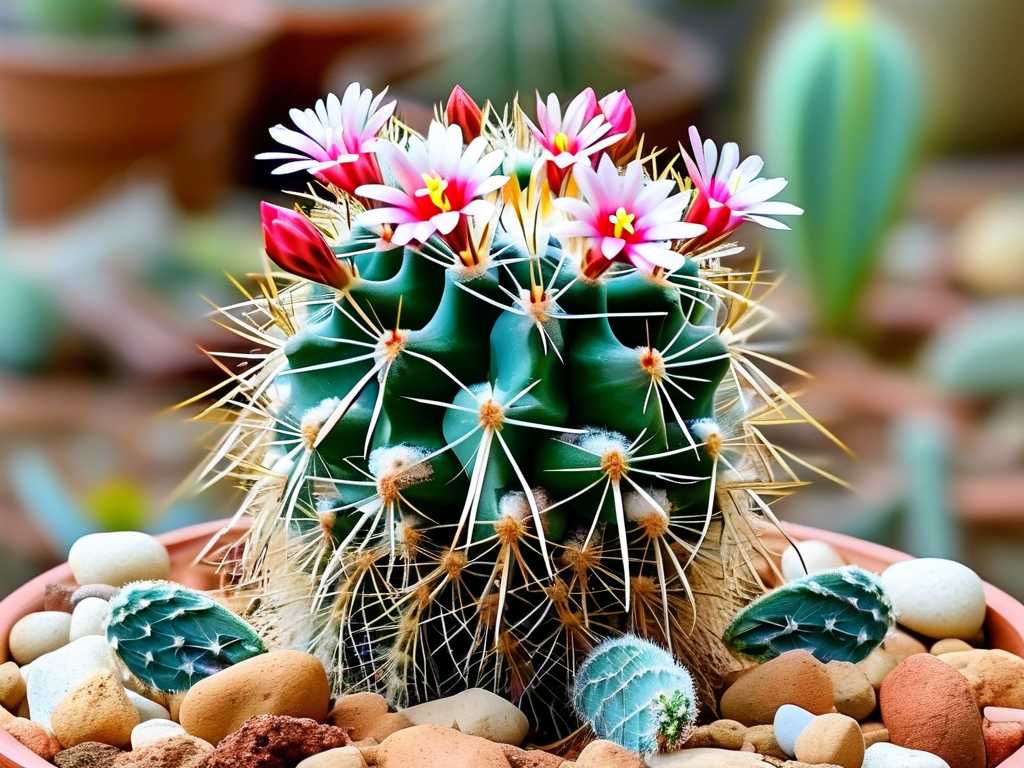
3. The Flowering Event Itself: A Critical Observation. I was lucky that a large Mammillaria specimen was beginning to bud. I watched it closely. The flowers emerged from the crown in a massive, encircling ring—a "crown of thorns" turned into a crown of blooms. According to AHSA (American Horticultural Society Almanac) references on plant life cycles, this terminal, all-encompassing floral display is a classic monocarpic signature. The plant was putting every last resource into this show. My Gymnocalycium, a known polycarpic species, reliably produced a few flowers from its side each summer, a modest but recurring investment.
The Pitfalls I Encountered and How I Solved Them
The process wasn't seamless. I hit several snags that could confuse any grower.
Pitfall 1: The "Clustering" Confusion. I initially assumed a heavily clustering cactus like a Mammillaria must be polycarpic because the cluster lived on. I was wrong. In many monocarpic cactus plants, each individual head in the cluster is monocarpic. It blooms, dies, but is replaced by the surrounding offsets. The colony is polycarpic, but the individual stems are not. The solution was to focus on the fate of the specific stem that flowered, not the entire pot.
Pitfall 2: The Slow Decline Misdiagnosis. After flowering, a monocarpic plant doesn't always die instantly. My Agave took nearly a year to fully wither. I initially thought it was a disease or watering issue. The key was linking the decline directly to the massive flowering event that had just occurred. The solution was patience and observation, resisting the urge to over-water or over-fertilize in a futile attempt to "save" it.
Pitfall 3: Relying Solely on Online Forums. Early on, I found conflicting information on social media groups. One user insisted all Mammillaria were polycarpic, which my research and observation proved false. I solved this by cross-referencing forum advice with scientific sources like the CSSA and academic botanical gardens' websites. Expertise matters.
Your Actionable Checklist for Differentiation
Based on my two-week study, here is the simple checklist I now use:
-
Before Flowering:
- Research the Genus: Look up the specific genus on a reputable society website. Is monocarpy a known trait?
- Observe Pup Production: Is the plant suddenly producing a large number of offsets around its base after years of solitary growth? This is a strong monocarpic clue.
- Growth Pattern: Is it a single, unbranched rosette or column aiming for one grand finale?
-
During/After Flowering:
- Flower Location: Are the flowers emerging from the very center of the growing tip, effectively terminating it?
- Scale of Bloom: Is the flowering display disproportionately large and exhaustive compared to the plant's size?
- Post-Bloom Growth: Does the stem that flowered show no new vegetative growth and begin a slow, uniform decline?
Planning for the Lifecycle: Propagation is Key
Once you identify a monocarpic species, your mindset must shift from preservation to propagation. The death of the parent is not an end, but a continuation. Here’s what I do:
- Harvest Offsets Early: Gently remove the pups produced before the main plant flowers. Let them callous for a week, then pot them in gritty mix.
- Collect Seeds: If the bloom is imminent, let it proceed! Harvest seeds from the spent flower pod. Sowing seeds ensures genetic diversity and is the most rewarding way to continue the legacy.
- Succession Planting: Always have the next generation growing. I now keep a pot of "successor" pups for my large monocarpic specimens, so the garden's structure remains.
Is my cactus dying because I did something wrong, or is it monocarpic? Link the symptoms to the timeline. If the plant recently had an exceptionally large, central bloom and is now declining uniformly (not from a localized rot or pest), it's almost certainly a natural monocarpic cycle. Your care gave it the strength to complete its magnificent life cycle.
Can I prevent a monocarpic cactus from flowering to save it? No, and you shouldn't try. The flowering impulse is hormonally programmed at the end of the plant's life. Removing the flower stalk might delay death slightly but won't stop it, and you'd rob the plant (and yourself) of its spectacular finale and the chance to collect seeds.
Are all agaves and sempervivums monocarpic? While the vast majority are, there are rare exceptions and debates about certain species. The general rule is so strong that you should always assume they are and plan your garden propagation accordingly. Always research your specific species for absolute certainty.
Understanding the difference between monocarpic and polycarpic cacti transformed my relationship with my collection. The anxiety of unexpected loss is gone, replaced by a respectful appreciation for each plant's biological strategy. I now admire the patient, recurring beauty of my polycarpic cacti with gratitude, and I anticipate the dramatic, once-in-a-lifetime spectacle of my monocarpic species with excitement, not dread, because I have their offspring ready to carry on. This knowledge isn't just about identification; it's about becoming a more insightful, prepared, and successful steward of these remarkable plants.