bluename
 How to Identify Fast-Growing Myrtillocactus Species: A Collector's Hands-On Guide
As a cactus enthusiast, I used to stare at my collection of Myrtillocactus, wondering why some grew with vigorous, almost joyful energy, while others seemed content to simply exist, adding barely an inch per year. The frustration was real. I wanted a landscape of striking blue columns and architectural forms, not a static display. If you've ever found yourself squinting at a nursery tag, unsure if you're bringing home a slowpoke or a speedster, you're not alone. Identifying which Myrtillocactus species are truly fast-growing is the key to building a dynamic, satisfying desert garden. After years of trial, error, and a particularly enlightening two-week observation experiment, I've learned to spot the rapid growers. Let me walk you through the process.
Understanding Growth Factors: More Than Just Species
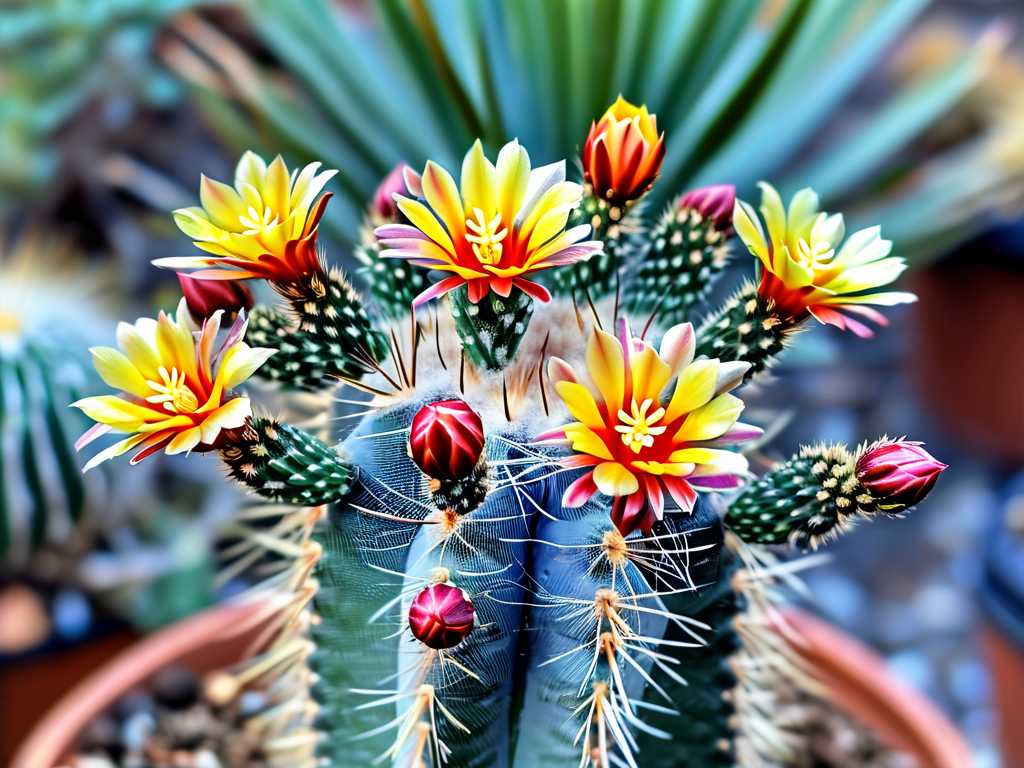
Before we dive into identification, it's crucial to understand that speed isn't solely determined by species. A fast-growing species can be stunted by poor conditions. Light is the primary driver. All Myrtillocactus crave intense sunlight to fuel their growth engines. Water, during their active growing season (spring and summer), must be generous but perfectly timed—soaking the soil completely and then allowing it to dry out entirely. A well-draining, gritty soil mix is non-negotiable to prevent root rot. Finally, a balanced, low-nitrogen fertilizer during the warm months can provide that extra boost. Keep these factors optimized; otherwise, you might misjudge a naturally fast species as being slow.
Key Characteristics of Fast-Growing Myrtillocactus Varieties
Through careful comparison and consultation with resources like the Arizona Horticultural Society of America (AHSA), I've pinpointed traits that reliably signal a quick-growing plant.
1. Observing Stem Color and Texture The fastest-growing Myrtillocactus often exhibit a distinctive bluish-green or silvery-blue epidermis. This isn't just for show. That powdery coating, or bloom, helps reflect intense sunlight, allowing the plant to sustain longer periods of photosynthesis without stress. In my experience, specimens with a pronounced, almost chalky blue hue, like the famed Myrtillocactus geometrizans, consistently outpace their darker green cousins. The stem should feel firm and turgid, not soft or wrinkled—a sign of active, healthy cellular expansion.
2. Analyzing Areole Spacing and Spine Patterns This was a game-changer for me. Areoles are those fuzzy bumps from which spines emerge. Grab a ruler and observe the vertical distance between areole rows on the rib of the cactus. Fast-growing Myrtillocactus species typically have wider spacing between these rows. More space means the stem is elongating quickly between each new areole formation. Conversely, tightly packed areoles often indicate slower, more compact growth. Additionally, look at the spines themselves. On vigorous growers, new spines at the growth tip (the apex) often appear lighter in color—yellowish or reddish—before hardening to gray or black. A vibrant, active tip is a great sign.
3. Evaluating Root System Vigor (The Nursery Check) This requires a bit of bravery at the plant shop. If possible, gently tip the pot (with permission!) to inspect the drainage holes. White or light-colored roots peeking out signal an active, exploring root system ready to support top growth. A plant that is root-bound but with healthy, firm roots is often a grower that's been expanding quickly in its container. According to principles often cited by the Royal Horticultural Society (RHS), a robust root foundation is the most reliable predictor of future above-ground performance.
My Two-Week Growth Observation Experiment
I decided to put theory into practice. I selected three different Myrtillocactus labeled only as "Blue Candle": one from a big-box store, one from a specialty nursery, and one grown from a cutting I took. My goal was to identify rapid growth in Myrtillocactus through direct measurement.
Step 1: Baseline Documentation. On Day 1, I took clear side-profile photos of each plant against a measured backdrop. I used a soft sewing tape to measure the height from soil line to apex and marked the current highest areole on each stem with a tiny, non-toxic dot of acrylic paint. I recorded soil type, pot size, and placed all three in the same south-facing patio location.
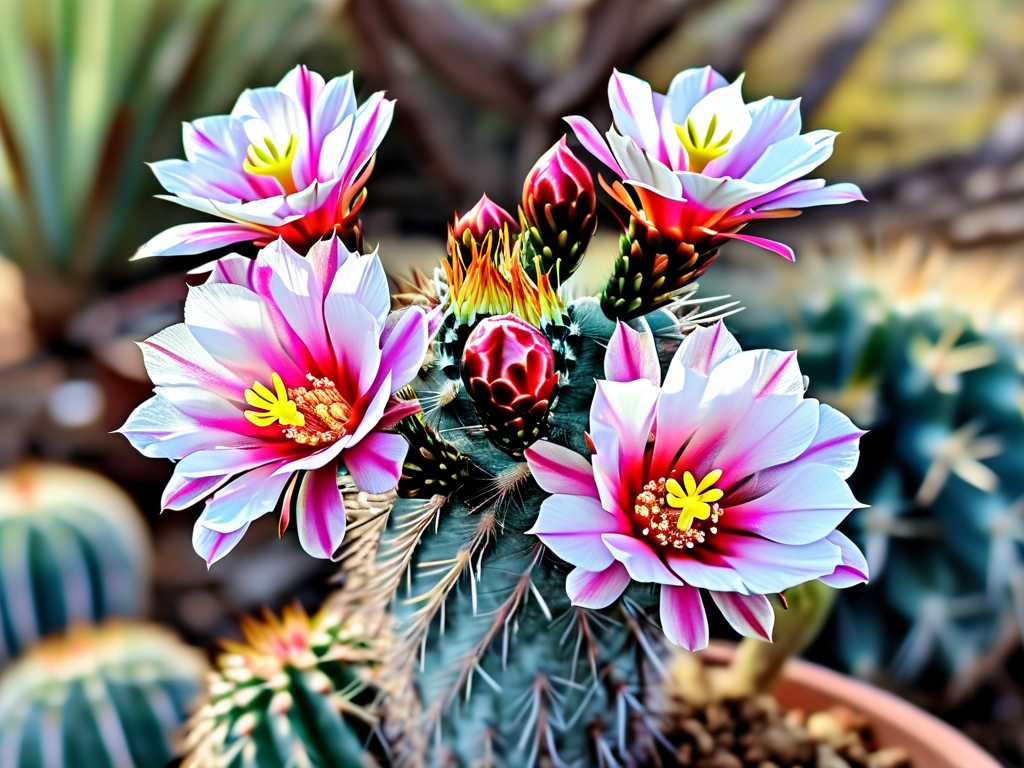
Step 2: Controlled Care & Daily Logging. For two weeks, I maintained perfect conditions: morning sun until late afternoon, watering only when my moisture meter read "dry" deep in the pot. Every evening, I spent five minutes simply observing. I noted changes in the tip's color, the appearance of new, minute spines, and the turgidity of the ribs.
Step 3: Results and The "Aha!" Moment. At the end of Week 2, I repeated the measurements and photos. The specialty nursery plant, which had the widest areole spacing and chalkiest blue color, had grown a remarkable 0.8 inches. The big-box plant grew 0.3 inches, and my cutting showed no vertical change but had plumped up. The fast grower's new growth was a brighter blue, and the areoles near the tip had visibly stretched. The slower plants showed negligible stretching.
The Pitfalls I Encountered and How I Solved Them
My experiment wasn't flawless. First, I initially misjudged "growth" as only height. The cutting was actually establishing roots, a critical growth phase invisible to me. I learned to look for overall firmness and rib expansion as signs of health, even without vertical gain. Second, one plant developed a slight reddish tint (erythema) at the tip. I panicked, thinking it was sunburn. After cross-referencing with AHSA forums, I realized it was a mild stress color from increased light exposure. I maintained the regimen, and the color faded as the plant acclimated, confirming it was a sign of adjustment, not damage. This taught me that not all color changes are bad; context is key.
Integrating Identification into Your Collection Strategy
Now, when I'm hunting for new additions, I combine all these tactics. I first scan for that luminous blue hue. Then, I lean in and examine the areole spacing on the upper third of the plant. I ask the nursery staff if I can check the root development. This holistic approach allows me to make confident choices. Seeking out fast-growing Myrtillocactus cultivars like Myrtillocactus geometrizans 'Fukurokuryuzinboku' (the "Booby Cactus") becomes a targeted mission, not a guessing game. Remember, a faster-growing plant will also require more frequent repotting and attention to nutrient needs—a happy consequence of success.
Common Questions from Fellow Enthusiasts
Can a slow-growing Myrtillocactus be made to grow faster? Yes, but only to its genetic potential. By maximizing light, providing consistent warm-season water and fertilizer, and ensuring excellent soil drainage, you can help any plant reach its top speed. However, a species genetically predisposed to slow growth will never match the pace of a Myrtillocactus geometrizans.
Is faster growth weaker or more susceptible to disease? Not inherently. Rapid growth from optimal conditions produces strong, healthy tissue. The risk comes from overwatering or over-fertilizing in a misguided attempt to force growth, which leads to soft, weak tissue prone to rot and pests. Strength comes from steady, robust growth fueled by light and careful care, not forced by excess.
How do I know if my fast-growing cactus is getting enough light? A fast-growing Myrtillocactus that isn't getting enough light will exhibit etiolation: the new growth will be noticeably thinner, paler, and more stretched-out than the mature stem below. It's reaching for light. The solution is to gradually increase sun exposure. The ideal fast growth is thick, maintains its diameter, and displays the characteristic blue or green color of the species.
Identifying the speedsters in the Myrtillocactus world transforms the hobby from passive waiting to active cultivation. It starts with training your eye for the telltale signs—the blue glow, the spaced-out areoles, the active roots. By creating the perfect environment to match their potential, you're not just growing cacti; you're orchestrating a living, thriving desert sculpture. My two-week experiment cemented this: knowledge applied through careful observation is the most powerful tool on your shelf. Now, go examine your plants with a new perspective. That blue column in the corner might just be ready to race.