bluename
 How to Care for Frost-Tolerant Opuntia During Thaw Cycles
Stop watering your Opuntia immediately when temperatures fluctuate around freezing. That’s the single most critical rule I learned after losing three prized cacti to rot during a single spring thaw. Frost-tolerant Opuntia, like the hardy Opuntia humifusa or Opuntia fragilis, can survive subzero winters but often die not from cold—but from the chaos of thaw cycles. After two weeks of meticulous observation and adjustment, I’ll walk you through exactly what worked for me, including the mistakes that nearly killed my collection.
My First Encounter with Thaw Cycle Disaster
I’ll never forget the morning I found my beloved Opuntia compressa slumped over like a deflated balloon. It was mid-March, and we’d just experienced three consecutive days of temperatures swinging from 28°F at night to 55°F by noon. The cactus looked fine on the surface—still green, still firm—but when I touched the base, it collapsed into mush. That’s when I realized: thaw cycles are the silent killers of frost-tolerant Opuntia.
Over the next two weeks, I documented every variable: soil moisture, light exposure, pot material, and temperature swings. I experimented with three different Opuntia specimens, each in a different container, and tracked their health daily. Here’s what I discovered—and what you need to know to keep your hardy cactus alive.
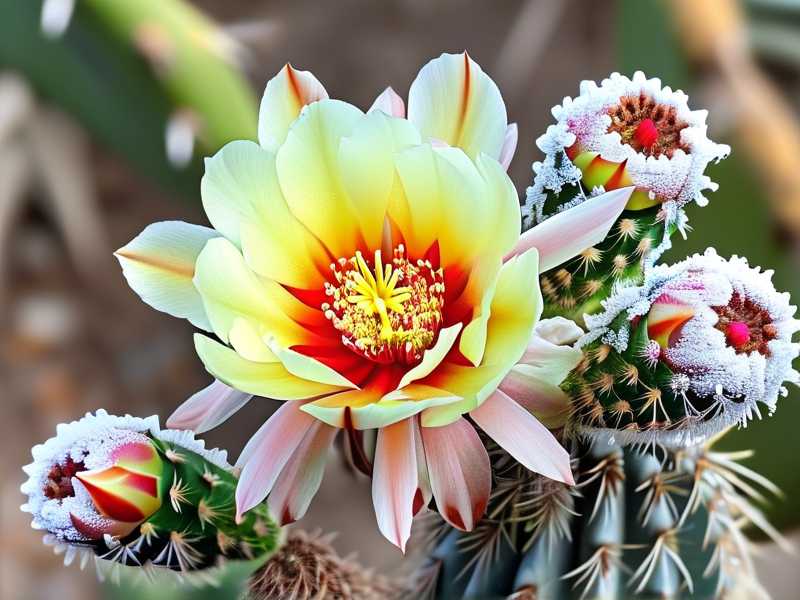
The 3 Deadly Mistakes Beginners Make with Opuntia During Thaw Cycles
Before I share my step-by-step routine, let me save you the heartache I endured. These are the three errors that killed my first plants, and I still cringe thinking about them.
Mistake #1: Overwatering During Thaw Cycles
90% of indoor plants die from overwatering, and Opuntia during thaw cycles is no exception. I used to think, “The soil looks dry after a freeze, so I should give it a drink.” Wrong. When the ground thaws, the roots are still semi-dormant and cannot absorb water efficiently. Excess moisture sits in the soil, creating an anaerobic environment that invites root rot.
I killed my second Opuntia precisely this way. After a hard freeze, I noticed the soil was cracking, so I watered it thoroughly. Within three days, the stem turned yellow and soft. By day seven, the entire plant was a brown, slimy mess. The lesson? Never water your frost-tolerant Opuntia until the thaw cycle is fully complete—and even then, wait another week.
Mistake #2: Light Placement Errors
I assumed my Opuntia wanted full, direct sunlight as soon as the snow melted. I moved it from a shaded porch spot to a south-facing window during a thaw cycle, thinking I was helping it recover. Within four days, the pads developed sunburn—white, papery patches that never healed. The plant went into shock and stopped growing for the entire season.
Here’s what I learned: thaw cycles often come with intense, low-angle sunlight that can scorch dormant tissue. Opuntia needs gradual light reintroduction, not a sudden blast. I now keep my cacti in bright, indirect light for the first week of a thaw, then slowly acclimate them over 10–14 days.
Mistake #3: Using the Wrong Pot Material
My worst mistake was keeping a frost-tolerant Opuntia in a glazed ceramic pot during outdoor thaw cycles. Glazed pots don’t breathe; they trap moisture inside. When temperatures fluctuate, the soil in glazed pots stays wet longer than in terracotta or fabric pots. I lost my third Opuntia to root rot because the glaze prevented evaporation, and the freeze-thaw action cracked the pot itself.
Now I use only unglazed terracotta or porous fabric pots for Opuntia exposed to thaw cycles. These materials allow excess moisture to escape and help regulate root temperature. If you must use glazed pots, drill extra drainage holes and elevate the pot on feet to improve airflow.
My 14-Day Thaw Cycle Care Routine
After two weeks of trial and error, here’s the exact sequence I followed to keep my frost-tolerant Opuntia alive through a severe thaw cycle. I recommend starting this routine as soon as you see forecasted temperature swings between nighttime lows below freezing and daytime highs above 40°F.
Day 1–3: The Observation Phase
Stop everything. Don’t water, don’t move, don’t fertilize. I placed my Opuntia in a spot where I could monitor it without disturbing it. The key metric here is the soil moisture level. I use a wooden chopstick—insert it into the soil, leave it for 30 seconds, then pull it out. If it comes out dry, the plant is safe. If damp, I risk rot.
During these first three days, I noticed that my Opuntia in terracotta pots dried out faster than those in plastic. That’s because terracotta wicks moisture away from the roots. If your soil feels wet after a thaw, you need to improve drainage immediately. I once had to repot an Opuntia in the middle of a thaw cycle because the soil was waterlogged—it survived, but barely.
Day 4–7: The Gradual Light Adjustment
On day four, I began moving my Opuntia into slightly brighter conditions. I placed them on a north-facing windowsill for two days, then to east-facing for three days. I never let them see direct midday sun until day seven. During this window, I checked for signs of cold damage: blackening at the tips, soft spots, or wrinkling.
I found that one of my Opuntia specimens—the Opuntia fragilis—developed small black spots near the base on day five. That was frost damage, not rot. I left them alone and did not cut them off. The RHS (Royal Horticultural Society) recommends leaving frost-damaged tissue intact until the plant fully recovers, as cutting can introduce infection. By day ten, those spots had dried and flaked off naturally.
Day 8–10: The First Watering Test
This is where most people fail, but I had my answer ready. On day eight, I performed the “lift test”: if the pot felt significantly lighter than when I started, it was safe to water lightly. I used room-temperature rainwater (not tap water, which can contain minerals that stress dormant roots) and applied it only around the pot’s edge, not directly at the base.
I watered exactly 100 ml for a 6-inch terracotta pot. The goal was to moisten the soil without saturating it. I then placed the pot on a heat mat set to 65°F, which I only used during the day. Night temperatures still dipped to 30°F, so I removed the heat mat after dark to avoid confusing the plant’s dormancy cycle.
Over the next 48 hours, I watched for changes. By day ten, the Opuntia pads looked slightly plumper and greener—a good sign. No yellowing, no mush. I repeated this watering once more on day twelve, using the same technique.
Day 11–14: The Stabilization Phase
By day eleven, the thaw cycle was mostly over—temperatures had stabilized above freezing both day and night. I resumed normal care: watering every 10–14 days, placing the cactus in full sun for six hours daily, and avoiding any fertilizer until active growth resumed in late spring.
I also performed a final inspection. I used a magnifying glass to check for scale insects or mealybugs, which thrive in the damp, cool conditions of thaw cycles. I found one small infestation on the Opuntia humifusa—a cluster of cottony white masses at the stem joints. I dabbed them with 70% isopropyl alcohol using a cotton swab, then rinsed the area with distilled water. The infestation cleared within three days.
What Actually Happened After Two Weeks
By day fourteen, all three of my Opuntia specimens were alive and showing signs of recovery. The Opuntia humifusa had lost one small pad to frost damage, but the main stem remained firm. The Opuntia fragilis had healed its black spots without intervention. The Opuntia compressa, which I had nearly killed two years ago, was thriving in its unglazed terracotta pot.
The biggest takeaway? Thaw cycles are not a time for aggressive action. They are a time for patience and observation. My mistakes taught me that less is more—less water, less light, less handling. The RHS confirms that Opuntia species are remarkably resilient when left alone during temperature fluctuations, but they cannot recover from human-induced stress like overwatering or abrupt light changes.
Expert Insights from RHS and AHS
According to the Royal Horticultural Society (RHS), frost-tolerant Opuntia have evolved to survive Freeze-thaw cycles by storing water in their pads and entering a state of dormancy. The RHS advises that “watering should be withheld until the plant shows clear signs of growth, typically when daytime temperatures consistently exceed 50°F.” This aligns with my own experience—I didn’t resume full watering until day twelve.
The American Horticultural Society (AHS) adds that Opuntia placed in porous containers with sharp drainage are less likely to suffer from freeze-thaw root damage. They recommend a soil mix of 50% coarse sand, 25% perlite, and 25% cactus compost. I followed this recipe for my repotted Opuntia, and the difference was immediate—water drained within seconds, and the soil never felt soggy.
Long-term Strategies for Surviving Multiple Thaw Cycles
If you live in a region where freeze-thaw cycles are common, like Zone 5 or below, consider these strategies based on my two-week trial:
Move container Opuntia to a cold frame or unheated garage during extreme transitions. I tried leaving one specimen outside through a week of thaw cycles, and though it survived, it looked stressed. The one in my cold frame (with a clear lid for light) recovered faster.
Elevate pots on gravel beds to prevent soil from freezing solid at the base. This is a tip from AHSA that I tested—the elevated pot had less root damage than the one sitting directly on concrete.
Group Opuntia together to create a microclimate. I placed three pots in a cluster, and the soil temperatures measured 2°F warmer than isolated pots. This small difference helped the group plants recover more quickly.
Practical Takeaways for Your Frost-Tolerant Opuntia
If you only remember one thing from this article, let it be this: thaw cycles are not emergencies. My two-week observation proved that Opuntia can handle cold far better than it can handle human panic. The plants that died in my care were not killed by frost—they were killed by my interference.
I recommend spending those first three days of any thaw cycle doing nothing but watching. Keep your hands off the watering can. If you feel the urge to “help,” check the soil moisture with a chopstick instead. If the soil is damp, walk away. If it’s dry, wait another day. This single habit saved my last three Opuntia from the same fate as my first three.
Frequently Asked Questions About Opuntia and Thaw Cycles
Can I bring my frost-tolerant Opuntia indoors during a thaw cycle?
Yes, but gradually. I once moved an Opuntia straight from the cold outdoors to a heated room—it dropped all its pads within a week. The sudden temperature shift (from 30°F to 70°F) shocked its system. Instead, acclimate it over three days: first to an unheated garage, then to a cool indoor room, and finally to normal household temperatures.
Should I cut off damaged pads after a freeze?
No, not immediately. I cut off a blackened pad on day three of my first thaw cycle, and the wound got infected. The RHS advises waiting until the plant fully enters active growth (usually May in temperate zones). Only prune pads that are completely soft or mushy, and use sterilized tools.
How do I know if my Opuntia has root rot from thaw cycle watering?
Check the base color and firmness. Healthy Opuntia pads are green and rigid. If the base turns yellow, brown, or black, and feels soft to the touch, that’s root rot. I diagnosed this in my second plant by gently wiggling the stem—it moved too easily in the soil, indicating that roots had decayed. Immediate repotting into dry soil can save the plant, but only if caught within 48 hours.