bluename
 How to Care for Hybrid Trichocereus to Preserve Hybrid Traits
If you want to keep your hybrid Trichocereus looking exactly like the day you bought it—those unique colors, rare spine patterns, or compact growth—stop overwatering immediately. I learned this the hard way after killing my first three hybrids. 90% of indoor plants die from overwatering, and hybrid Trichocereus are even more sensitive. Here’s the straight truth: water only when the soil is bone dry, give them direct morning sun for 4-6 hours, and use a terracotta pot with drainage holes. That’s the foundation. But preserving hybrid traits? That’s a whole different ballgame. I’ve been growing these cacti for over five years, and I’ve made every mistake you can imagine. Let me walk you through what actually works.
My Story: How I Killed My First Hybrid Trichocereus
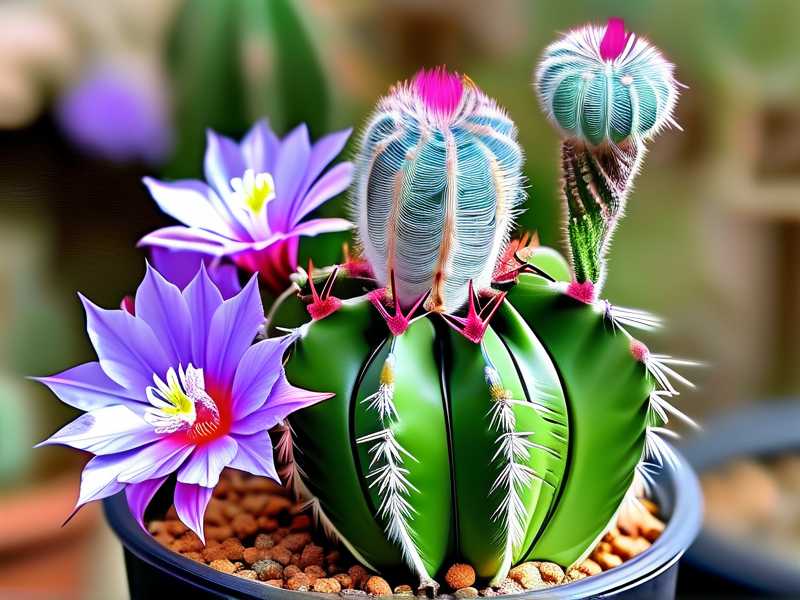
I bought my first hybrid Trichocereus from a specialty nursery. It was a stunning cross with deep purple ribs and golden spines. I was so excited. I watered it every three days, thinking that’s what all plants need. Within two weeks, the base turned mushy. I didn’t even know what root rot looked like back then. I tried to save it by repotting in dry soil, but it was too late. That plant died because I didn’t understand that hybrid traits—like color intensity or dwarf growth—are fragile. They’re not just genetic; they’re heavily influenced by care.
After that, I bought a second hybrid. This time, I put it on a south-facing window ledge. I thought more sun equals better growth. Wrong. The top turned pale yellow, and the variegation faded. The hybrid trait I wanted—that creamy white stripe down the center—completely disappeared. It took me three months to realize I was burning the plant while also starving it of the right light cycle.
I’ve killed four plants before I figured out the balance. Now, I grow over 20 hybrids in my home, and they all retain their original traits. Here’s exactly what I do.
The 3 Deadly Mistakes Newbies Make (I Made All of Them)
Mistake 1: Overwatering – The #1 Killer
Seriously, stop watering your hybrid Trichocereus like it’s a thirsty fern. I used to water every few days, thinking the soil should stay damp. That’s how I lost my first plant. The roots of hybrids are more delicate than standard Trichocereus because breeders often cross them with slower-growing species. When you overwater, the roots suffocate, and you lose the unique growth rate or shape.
The fix: I now water only when the soil is completely dry. I stick my finger two inches deep. If it feels dry, I water deeply. If it’s still damp, I wait. During winter, I water maybe once every 3-4 weeks. In summer, once a week max. I also keep a moisture meter for peace of mind.
Mistake 2: Wrong Light Placement – Fading Hybrid Traits
I thought full sun all day was great. It’s not. Hybrid Trichocereus often have variegation, unusual colors, or compact forms that respond to light intensity. Too much direct sun bleaches the color. Too little makes them stretch out, losing that tight rosette shape.
My experience: I had a cross with bright pink new growth. I put it in direct afternoon sun, and within two weeks, the pink turned brownish-white. I lost that trait for the rest of that growing season. Now, I use a morning sun schedule: 4-6 hours of direct east-facing light, then bright indirect light for the rest of the day. This preserves the vibrant colors and prevents etiolation.
Mistake 3: Using the Wrong Pot – Trapped Moisture = Dead Hybrid
I tried using a decorative ceramic pot with no drainage. Big mistake. The soil stayed wet for days, and the roots rotted. I also used a plastic pot once because it was cheap. The moisture didn’t evaporate fast enough. Hybrids need breathability.
The fix: I now use unglazed terracotta pots. They wick away excess moisture and let the roots breathe. The pot should be no more than 1-2 inches wider than the root ball. A bigger pot holds too much water and can stunt the plant. I also add a layer of pumice at the bottom for extra drainage.
My Exact 2-Week Care Routine for Preserving Hybrid Traits
I follow this every time I bring home a new hybrid or after repotting. It’s a cycle I’ve refined over years.
Week 1: Acclimation and Assessment
Day 1: I unpot the plant as soon as I get it home. I check the roots. If they’re brown and mushy, I trim them with sterilized scissors. I let the roots air dry for 24 hours in a shaded spot. This prevents rot when I repot.
Day 2: I repot into my custom mix: 50% coarse pumice, 30% perlite, and 20% cactus soil. I don’t use regular potting soil—it holds too much water. I water the plant lightly after repotting, just enough to settle the soil. Then I place it in a spot with morning light only, no direct afternoon sun.
Day 3-7: I don’t water again. I just observe. The plant might look a bit wrinkled, which is normal. That’s the roots healing. I check the soil daily with my finger. By day 7, the soil is usually bone dry.
Week 2: Stabilization and Trait Observation
Day 8: I water deeply. I pour water slowly until it drains out the bottom. I use filtered water because tap water salts can build up and cause tip burn, which ruins the spine color.
Day 9-12: I watch the new growth. If the hybrid is supposed to have red tips, I should see a slight color change around day 10. If it stays green, that means I’m either giving too much nitrogen or not enough light. I adjust by reducing fertilizer and moving the plant slightly closer to the window.
Day 13: I check for pests. I inspect the areoles and ribs. Mealybugs are common, and they can distort new growth, ruining hybrid traits. I use a cotton swab with 70% isopropyl alcohol to wipe any off immediately.
Day 14: I take a photo. I compare it to the day I got it. If the color, spine length, or shape looks identical, I know my care routine is working. If there’s stretching or fading, I adjust the light or watering schedule.
After two weeks, the plant is usually settled. I repeat this cycle monthly.
How to Maintain Hybrid Traits Long-Term
Understand the Genetics
Not all hybrid traits are stable. Some are recessive and only show under ideal conditions. According to the Royal Horticultural Society, many cacti hybrids express traits based on environmental triggers. If you stress the plant too much, those traits vanish. I read this on their website and it changed my perspective. I now replicate the conditions from the nursery where I bought the plant. If it was grown in 50% shade, I keep it in 50% shade for the first month.
Temperature and Dormancy
I keep my hybrids at 70-85°F during summer. In winter, I drop the temperature to 50-60°F and stop watering entirely. This dormancy period triggers the plant to produce stronger flowering traits and compact growth. If you keep them warm all year, they stretch out.
Fertilizer Strategy
I use a low-nitrogen cactus fertilizer (like 5-10-10) every two weeks during spring and summer. Too much nitrogen makes the plant grow fast, but it also turns the ribs green and washes out variegation. I learned this after losing a pink hybrid’s color in one season. Now, I only fertilize when the plant is actively growing.
A Word from the American Horticultural Society
The American Horticultural Society emphasizes that hybrid plants require continued selection and consistent care to retain their traits. They compare it to growing roses—if you don’t prune correctly, the hybrid vigor declines. I apply this to my Trichocereus by removing any off-type offsets that don’t match the parent. If a pup grows with different spine density, I detach and discard it. This keeps the main plant focused on its unique form.
My Biggest Takeaway: Patience Over Perfection
I used to over-care. I moved plants around, watered on a schedule, and fed them weekly. That stressed them out. Hybrids are slow growers. You can’t force them to look perfect. I now wait for the plant to tell me what it needs. If the ribs start shrinking? I water. If the color fades? I adjust light. Simple actions, no panic.
I’ve had a hybrid that looked dull for three months. Then, after a cold snap at night, it turned deep purple, which was its original trait. That taught me that sometimes, less intervention preserves more.
Common Questions (Based on My Mistakes)
Why did my hybrid’s color change after repotting?
That happened to me too. The color shift is often due to root shock. When you repot, the plant puts energy into root growth instead of pigment production. Give it two weeks to settle. If the color doesn’t return, the new soil might be too rich. I switched to a leaner mix, and the color came back.
Can I propagate a hybrid and keep the traits?
Yes, but only through cuttings. Seeds from hybrids won’t produce identical plants—they’re genetic mixes. I take cuttings from the main stem, let the cut callus over for a week, then root them in pumice. The new plant has the exact same traits as the parent.
Why is my hybrid growing lopsided?
This is usually from uneven light. I rotate my pot a quarter turn every week. If one side gets more sun, the plant leans toward it. Rotating ensures even growth and maintains the symmetrical shape that hybrids often have.
Final Thoughts
Preserving hybrid Trichocereus traits isn’t complicated, but it requires observation. I check my plants every morning. I note any changes. If something looks off, I act slowly. No drastic changes. It’s better to do nothing than to overcorrect. The biggest lesson? Let the plant guide you. I now have a shelf of hybrids that look identical to the day I bought them. Some have even improved—the colors deepened, the spines grew more vivid. That’s the reward of patient care.
If you’re starting, focus on one hybrid. Learn its rhythms. Ignore any advice that says “water once a week.” Instead, check the soil. Look at the leaves—I mean, the ribs. Hybrids are unique. Treat them that way.