bluename
 How to Water Astrophytum Cactus to Maintain Its Symmetrical Body Shape
You’ve carefully chosen an Astrophytum cactus, captivated by its stunning, near-perfect geometric form. Yet, over time, you notice something unsettling. That beautiful, symmetrical body shape you fell in love with is starting to look a little… off. Perhaps one side is bulging more than the other, or the iconic ribs are becoming uneven. The culprit is rarely sunlight or soil—it’s almost always how you water. Mastering the art of watering is the single most important skill for preserving the Astrophytum’s sculptural beauty. This guide will provide the exact techniques on how to water Astrophytum cactus to ensure it not only survives but thrives, maintaining the flawless symmetry that makes it so unique.
Understanding the Astrophytum’s Unique Physiology
Before we dive into watering schedules, it’s crucial to understand why these cacti are so sensitive. Unlike some leafy succulents, Astrophytums have a highly organized internal structure. Their distinct ribs are not just for show; they are expansion panels. When water is abundant, the ribs swell and expand to store moisture in the stem’s core. When water is scarce, they contract. This natural expansion and contraction is normal, but irregular watering causes uneven expansion, permanently distorting the plant’s form. A lopsided appearance is a direct result of inconsistent moisture reaching different parts of the root system and core.
The Golden Rule: Soak and Dry
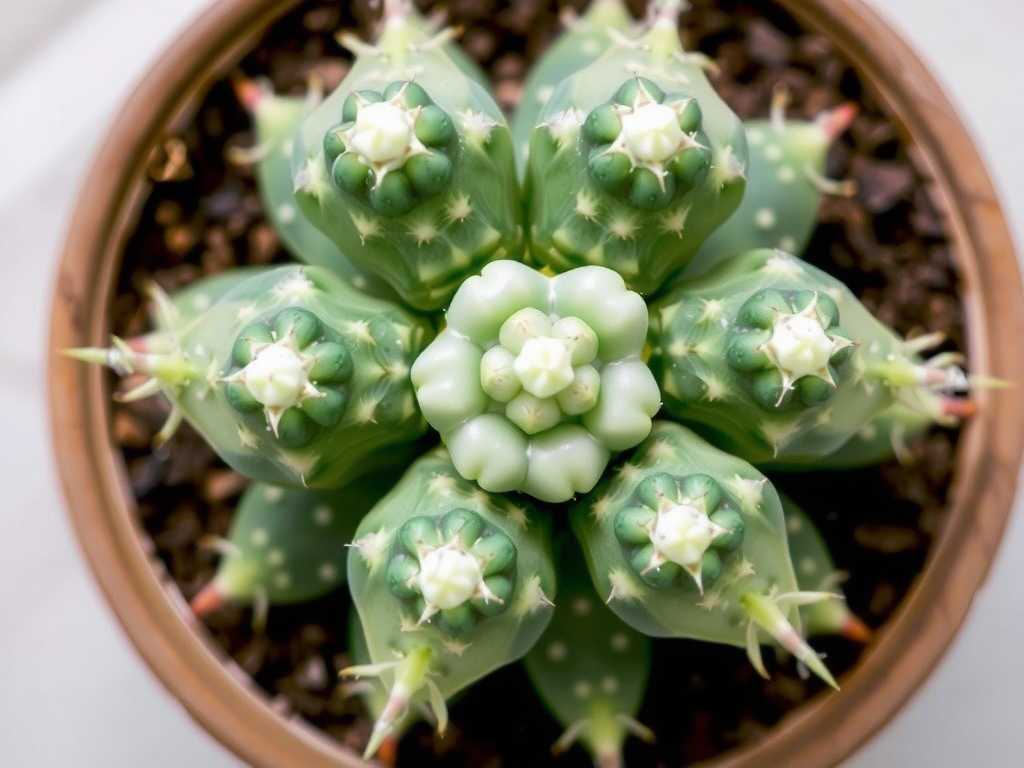
The only watering method that guarantees symmetrical growth is the “soak and dry” technique. This mimics the rare, heavy desert downpours these plants have evolved to exploit.
Step 1: The Thorough Soak When it’s time to water, do it with purpose. Slowly pour water around the base of the plant until it flows freely out of the drainage holes. This ensures the entire root ball and the porous soil medium are completely saturated. Every root fiber gets access to moisture, promoting even uptake and, consequently, even expansion of the cactus body. Top-watering is preferred to avoid salt buildup and ensures uniform soil moisture.
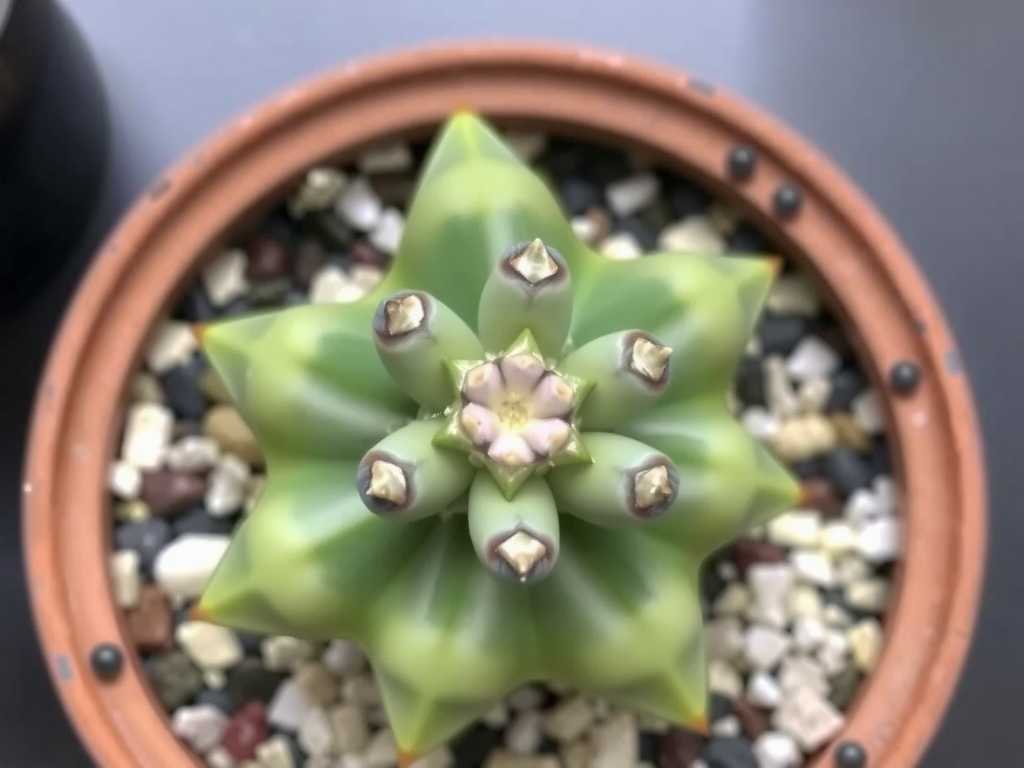
Step 2: The Critical Dry-Out Here is the non-negotiable phase. You must allow the potting mix to become completely dry all the way through before even thinking about watering again. Stick a wooden skewer or your finger deep into the soil. If it comes out with any dampness or soil particles clinging to it, wait. This prolonged dry period is when the cactus consolidates its growth and strengthens its skin. Rushing this step is the primary cause of bloating and asymmetry.
Creating the Perfect Watering Schedule (There Isn’t One)
Forget about watering on a fixed day of the week. Your schedule is dictated by four environmental factors:
- Season (The Growth Cycle): This is the primary driver. During active growth in spring and summer, your Astrophytum will need more frequent soaks as it metabolizes water quickly. In autumn, gradually extend the drying periods to prepare it for dormancy. In winter, watering should be almost entirely suspended—perhaps one light soak if the plant severely shrivels. Cold soil + wet roots = rot and catastrophic shape loss.
- Climate and Indoor Conditions: Is your home hot and dry or cool and humid? A cactus in a 75°F sunny window will dry out faster than one in a 65°F room. Use the “dry-out test” as your guide, not the calendar.
- Pot and Soil: Terracotta pots breathe and dry out faster than plastic or ceramic. Your soil must be a fast-draining, gritty mix. A commercial cactus soil amended with 50-70% perlite, pumice, or coarse sand is ideal. Proper soil is non-negotiable for executing the soak-and-dry method effectively.
- Plant Size and Maturity: A small, young Astrophytum in a tiny pot may dry out in a few days. A large, mature specimen in a big pot of gritty mix might take two weeks or more to dry completely.
Advanced Techniques for Flawless Symmetry
Beyond the basics, these pro-level practices will elevate your care and directly impact shape maintenance.
Rotate for Even Sun Exposure While watering affects internal expansion, light influences growth direction. Rotate your pot a quarter turn every time you water. This ensures all sides receive equal light, preventing the plant from leaning or growing preferentially toward the light source, which can exaggerate any minor asymmetry.
Water Based on Plant Signals, Not Soil Alone Learn to read your cactus. A well-hydrated Astrophytum feels firm and solid to a gentle squeeze. As it uses its water reserves, it will feel slightly less rigid, and the ribs may draw closer together. This subtle softening is a reliable, natural indicator that it is ready for its next thorough soak. This method aligns your care perfectly with the plant’s biological rhythm.
The Quality of Water Matters Over time, minerals in tap water (like calcium) can build up in the soil and on the cactus’s epidermis, forming a hard, crusty scale that can impede growth and mar its clean lines. Where possible, use rainwater, distilled water, or filtered water. This prevents mineral deposits and ensures the roots can efficiently absorb moisture and nutrients.
Common Watering Pitfalls That Destroy Shape
- The Death by Dribble: Giving small, frequent sips of water keeps the top roots moist while the bottom roots and core stay dry. This causes uneven growth and a weak, shallow root system.
- Winter Watering: Dormant Astrophytums cannot process water. Wet soil in cold conditions leads to root rot, which often causes the base to collapse and the entire body to become misshapen or perish.
- Ignoring Soil Compaction: Over time, soil breaks down and retains more water. If your mix stays damp for too long, repot into fresh, gritty soil to restore proper drainage and aeration.
FAQ: Your Watering Questions Answered
How do I know if I’m underwatering my Astrophytum? Chronic underwatering is less common but possible. The cactus will appear excessively shriveled, dry, and may stop growing for extended periods. The ribs will be deeply etched and tightly contracted. If a thorough soak plumps it back up within a day or two, it was thirsty. If the shriveling persists after watering, check for root rot.
Can a misshapen Astrophytum ever recover its symmetry? Once a mature rib has grown unevenly, that specific distortion is permanent. However, with perfectly consistent watering and care going forward, all new growth will be balanced. Over many years, the symmetrical new growth can make the old distortion less noticeable. The plant will become healthy and beautiful again, even if not perfectly geometric.
Is bottom-watering a good method for Astrophytums? Bottom-watering (placing the pot in a tray of water) can be useful to ensure complete saturation, especially for very dry, peat-based mixes. However, it should not be the sole method. It can allow salts to accumulate in the soil over time. A good practice is to alternate: bottom-water once, then top-water the next time to help flush out any mineral buildup.
Mastertaining the majestic, star-like form of your Astrophytum cactus is a rewarding practice in patience and observation. By embracing the soak-and-dry method, abandoning a fixed schedule in favor of environmental cues, and combining your watering with even light and perfect soil, you become more than just a plant owner. You become a steward of a living sculpture. The result is a thriving, symmetrically perfect specimen that showcases the stunning artistry of nature, perfected by your informed care.