bluename
 How to Differentiate Echinopsis vs Mammillaria Cactus Species: A Visual Guide
Have you ever found yourself admiring a spiky, globular cactus and wondering, "Is that an Echinopsis or a Mammillaria?" You're not alone. For cactus enthusiasts, novice gardeners, and even seasoned collectors, telling these two prolific and popular genera apart can be surprisingly tricky. At first glance, many species within these groups share a similar rounded, ribbed, or tubercled appearance. Misidentification is common, leading to confusion about proper care, growth expectations, and even plant purchasing decisions. This guide will cut through the confusion. We will provide you with a clear, visual framework to confidently differentiate Echinopsis vs Mammillaria cactus species by examining their most defining physical characteristics.
Understanding the distinction is more than an academic exercise; it’s key to providing optimal care. While both are fantastic choices for succulent collections, their needs and behaviors differ. By the end of this article, you'll be equipped to identify these cacti at a glance, ensuring they thrive under your care.
Core Identification: Breaking Down the Key Differences
The most reliable method for telling Echinopsis and Mammillaria apart lies in a systematic observation of their stems, spines, and flowers. Forget trying to memorize every species; focus on these fundamental structural traits.
Stem Structure and Shape: Ribs vs. Tubercles
This is the most fundamental and often the quickest way to start your identification.
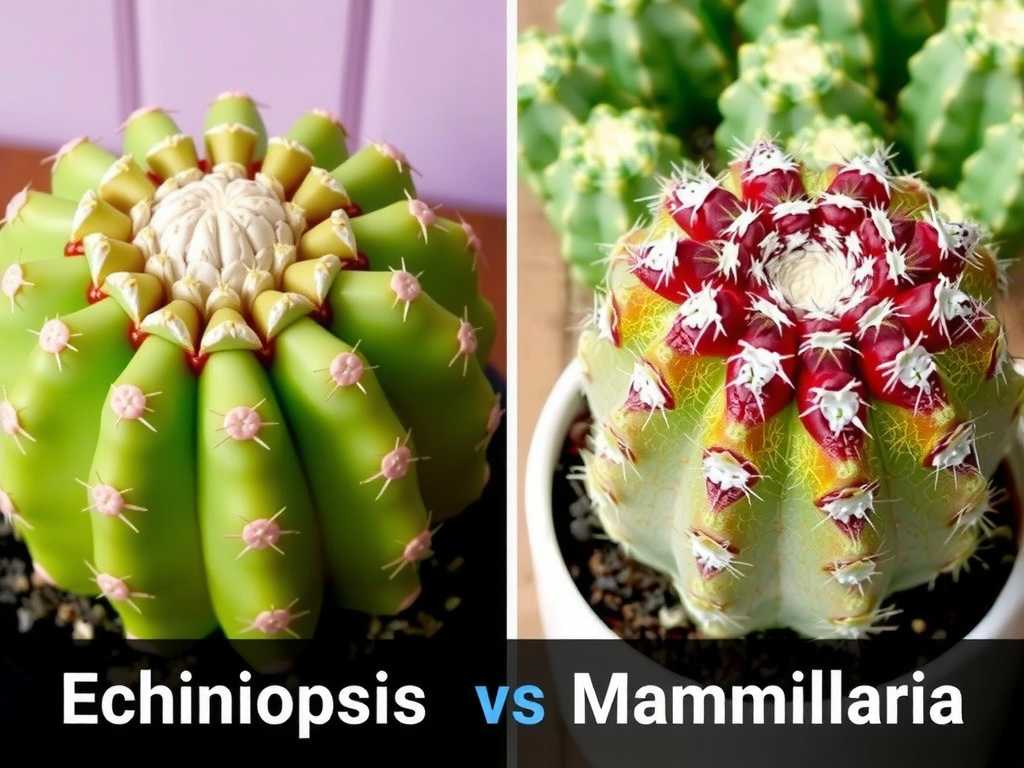
Echinopsis Cacti: Defined by Vertical Ribs Echinopsis species, which include the popular "Easter Lily Cactus" and many hybrid "Domino Cacti," feature stems with pronounced, vertical ribs. These ribs run from the top of the cactus to the base, like the pleats of an accordion. They can be shallow or deep, few or many, but they are always present as continuous, vertical structures. The ribs allow the cactus to expand and contract as it stores and uses water. When looking at an Echinopsis, you will see clear, linear grooves separating each raised rib.
Mammillaria Cacti: Characterized by Distinct Tubercles Mammillaria, one of the largest cactus genera, is defined by the presence of tubercles. Instead of continuous ribs, the body is covered in small, conical, nipple-like projections. These tubercles are arranged in spiral patterns around the stem. The spaces between these tubercles are called "axils." This tubercular structure is a non-negotiable identifier for the Mammillaria genus. The iconic "Pincushion Cactus" common name for many Mammillarias comes from this bumpy, textured surface.
Spine and Areole Formation: A Matter of Location
The arrangement of spines and the areoles (the specialized structures from which spines and flowers grow) provides another unmistakable clue.
Echinopsis: Areoles on the Ribs In Echinopsis, the areoles are situated directly on the ribs, typically on the highest points or along the ridges. Spines emerge from these areoles. The spines can vary dramatically—from short and bristly to long and central—but they always grow from areoles on the ribs. The areoles are often spaced out along the rib.
Mammillaria: Two Distinct Areole Zones This is a unique and definitive trait for identifying Mammillaria cactus types. Each tubercle has two separate areole zones:
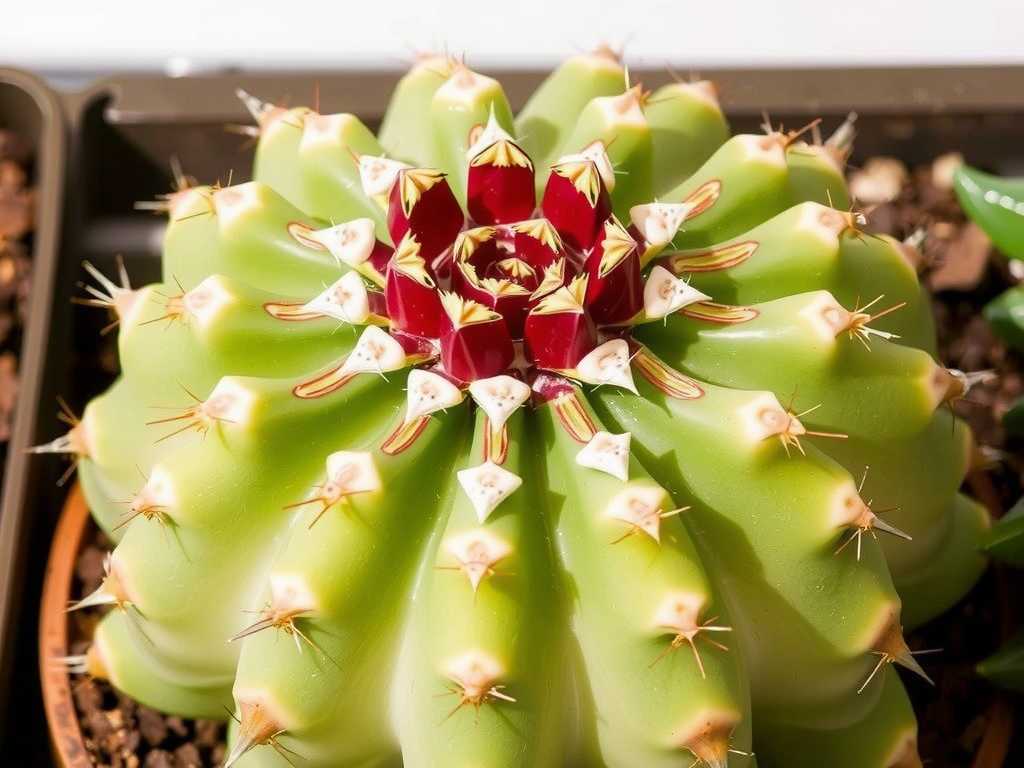
- The Axillary Areole: Located at the base of the tubercle, in the axil (the groove between tubercles). This area often produces wool or hairs, and sometimes small bristles. Critically, this is where the flowers and subsequent fruits will emerge.
- The Apical Areole: Located at the very tip of the tubercle. This is where all the spines—both radial and central—grow from.
This division of labor is a hallmark of the Mammillaria genus. No Echinopsis exhibits this two-zone areole system.
Flower Presentation: Crown vs. Circle
The flowers of these two genera are stunning but follow different architectural rules.
Echinopsis: The Spectacular Crown Bloom Echinopsis are famed for their large, often fragrant, trumpet-shaped flowers. These blooms are typically nocturnal or open in the late afternoon and may last only a day or two. They emerge from areoles on the side of the stem, usually in the upper third of the plant. A single plant can produce multiple spectacular flowers that form a crown-like ring around the stem, creating a dramatic display.
Mammillaria: The Floral Garland or Ring Mammillaria flowers are generally smaller, but they are produced prolifically. They emerge from the axillary areoles (in the axils between tubercles), often forming a perfect ring or garland around the crown of the cactus. This ring of flowers is a classic Mammillaria signature. The flowers are typically bell-shaped or funnel-shaped and come in shades of pink, white, yellow, or red. Unlike the fleeting Echinopsis bloom, Mammillaria flowers may last for several days to a week.
Growth Habits and Care Considerations
Understanding their physical differences also informs their care, aligning with the E-E-A-T (Experience, Expertise, Authoritativeness, Trustworthiness) principle by providing actionable, expert-backed advice.
Growth Rate and Form Echinopsis cacti tend to have a moderately fast growth rate compared to many other cacti. They often start globular but can become columnar as they age. Many popular varieties are prolific offsetters, quickly forming large clumps. Mammillaria species generally maintain a compact, globular or clustering "pincushion" form. Their growth is typically slower, and they spread by producing offsets (or "pups") around the base of the mother plant, forming dense mounds.
Watering and Light Needs Both genera appreciate bright light and well-draining soil. However, due to their often denser spine coverage and compact form, some Mammillarias can tolerate slightly less intense, direct midday sun than some Echinopsis, which thrive in full, direct sunlight. As noted by renowned botanist and cactus expert Dr. James Mauseth in his studies on cactus morphology, the tubercular structure of Mammillaria can create small pockets of shade on the stem surface. During active growth seasons, both benefit from thorough watering followed by a complete drying period. In winter, both require a cool, dry rest.
Visual Comparison Summary Table
| Feature | Echinopsis | Mammillaria |
|---|---|---|
| Stem Surface | Vertical ribs (like pleats) | Conical tubercles (nipple-like bumps) |
| Areoles | Single areole on ribs | Two zones per tubercle: Apical (spines) & Axillary (flowers) |
| Spine Origin | From areoles on ribs | From the apical areole on tubercle tips |
| Flower Origin | From lateral areoles on the upper stem | From axillary areoles (between tubercles) |
| Typical Flower Display | Large, trumpet-shaped, forming a crown | Small, numerous, forming a ring or garland |
| Common Habit | Often solitary or clustering, can become columnar | Typically globular and clustering into mounds |
What is the most foolproof way to tell them apart if the plant isn't flowering? Examine the stem surface and spine origin. Look for continuous vertical ribs (Echinopsis) versus distinct, separate tubercles (Mammillaria). Then, check if spines grow directly from the raised ribs or from the tips of individual bumps. The combination of tubercles and spines growing from their tips is a sure sign of Mammillaria.
Can a cactus be both an Echinopsis and a Mammillaria? No. They are distinct genera within the cactus family (Cactaceae). While they may look superficially similar to the untrained eye, their fundamental morphological structures—ribs vs. tubercles and single vs. dual areoles—place them in separate taxonomic groups. There are no natural hybrids between these two genera.
Which genus is easier for a beginner? Both are excellent for beginners due to their general resilience. Mammillaria might have a slight edge for those with limited space or slightly less intense light, as many species stay compact and can be slightly more forgiving of bright indirect light. Echinopsis is ideal for those seeking faster growth and spectacular, large blooms. Success with either depends more on providing ample light, excellent drainage, and a proper dry winter rest than on choosing one genus over the other.
Mastering the distinction between Echinopsis and Mammillaria transforms how you see and care for these remarkable plants. By focusing on the presence of ribs versus tubercles and understanding the unique dual-areole system of Mammillaria, you can move beyond guesswork. This knowledge empowers you to make informed purchases, provide species-appropriate care, and deepen your appreciation for the incredible diversity within the world of cacti. Your confidence in identifying these species will grow as you observe these key characteristics, making every visit to a nursery or your own collection a more engaging and knowledgeable experience.